

Material Structure of PVC Ceiling Film Explained
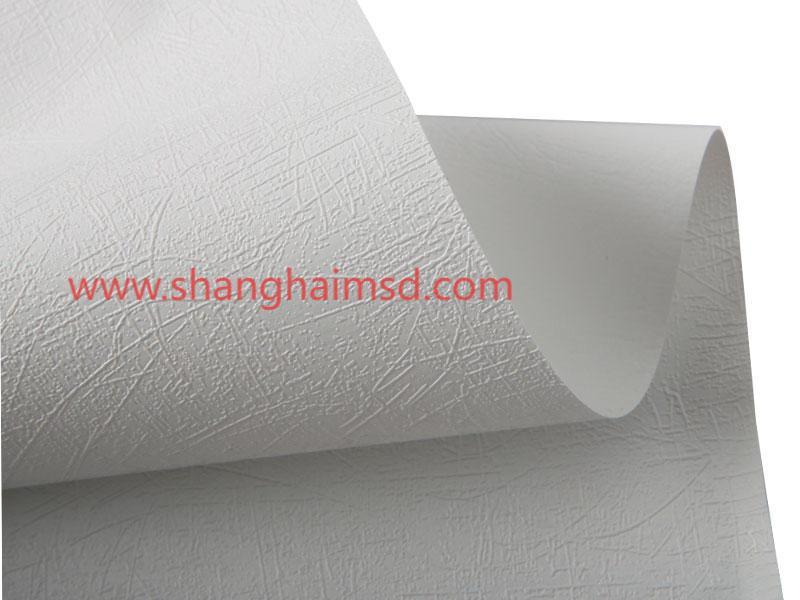
PVC ceiling films have become an increasingly important interior material as architectural design places greater emphasis on lightweight structures, surface uniformity, and long-term performance. In modern suspended ceiling systems, PVC Ceiling Film is often selected for its balance of flexibility, surface consistency, and adaptability to diverse indoor environments. Shanghai Ming Shida International Trading Company has closely followed this development, focusing on material stability and processing compatibility to meet the evolving needs of commercial and residential projects.
From a material perspective, PVC ceiling film is based on a carefully formulated polyvinyl chloride compound that combines elasticity with structural integrity. Plasticizers are incorporated to allow the film to stretch evenly during installation without tearing or thinning unevenly. Stabilizers help maintain color consistency and mechanical properties over extended periods of indoor use, while surface modifiers contribute to smoothness and visual clarity. The resulting film exhibits controlled thickness and uniform texture, which are essential for achieving seamless ceiling finishes.
The manufacturing process of PVC ceiling film requires precise control at each stage. Raw PVC resin is blended with additives under controlled temperature conditions to ensure homogeneous dispersion. This mixture is then processed through calendering or extrusion systems, where rollers or dies shape the film into a consistent sheet. Temperature control during this stage is critical, as excessive heat may affect transparency and flexibility, while insufficient heat can lead to surface irregularities. Shanghai Ming Shida International Trading Company emphasizes stable production parameters to achieve consistent film quality suitable for large-scale interior applications.
Surface treatment is another key aspect of ceiling film processing. Depending on the intended application, the film may undergo matte, satin, or gloss finishing to achieve specific visual effects. Anti-static treatments can be applied to reduce dust attraction, while protective coatings improve resistance to staining and discoloration. These surface enhancements do not alter the core structure of the material but significantly expand its usability in different interior settings such as offices, retail spaces, and hospitality environments.
PVC ceiling films are widely used in both functional and decorative applications. In commercial buildings, they provide a clean and uniform ceiling surface that integrates easily with lighting systems, ventilation outlets, and acoustic panels. In residential interiors, ceiling films allow designers to create smooth surfaces or subtle textures without the weight and complexity of traditional ceiling materials. Their flexibility enables installation on curved or irregular ceiling structures, expanding creative possibilities while maintaining installation efficiency.
Performance testing plays a vital role in ensuring that ceiling films meet project requirements. Tensile strength tests evaluate how the film behaves when stretched during installation, while elongation measurements confirm its ability to adapt to frame systems without damage. Dimensional stability tests assess how the film responds to temperature changes commonly found in indoor environments, ensuring it does not sag or contract over time. Surface durability tests examine resistance to scratching and staining, particularly in public or high-traffic areas.
Fire behavior is another important consideration for PVC ceiling films. While they are primarily used indoors, compliance with relevant fire safety standards is essential. Formulations can be adjusted to improve flame retardancy without compromising flexibility or appearance. Testing typically includes flame spread assessments and smoke density measurements, which help designers and contractors select suitable materials for specific building codes and usage scenarios.
Installation efficiency is one of the practical advantages of PVC ceiling films. The material can be cut precisely, heat-stretched, and fixed into perimeter tracks, allowing for relatively fast installation with minimal disruption. Its lightweight nature reduces structural load requirements, making it suitable for renovation projects where existing ceiling structures must be preserved. Maintenance is also simplified, as the smooth surface can be cleaned easily without specialized equipment.
Shanghai MSD International Trade Co., Ltd continues to refine its approach to PVC ceiling film supply by focusing on material consistency, processing reliability, and application adaptability. Through careful coordination with manufacturing partners, the company ensures that ceiling films meet the practical and aesthetic expectations of international markets while maintaining stable quality standards. More information about related interior film products and applications can be found at https://www.shanghaimsd.com/product/ .
 Dutch
Dutch
 English
 Arabic
 French
 Spanish
 Portuguese
 Deutsch
 Turkish
 Italiano
 Russian
 Romaian
 Portuguese (Brazil)
 Greek
Greek