

What Makes Damascus Kitchen Knives So Sharp
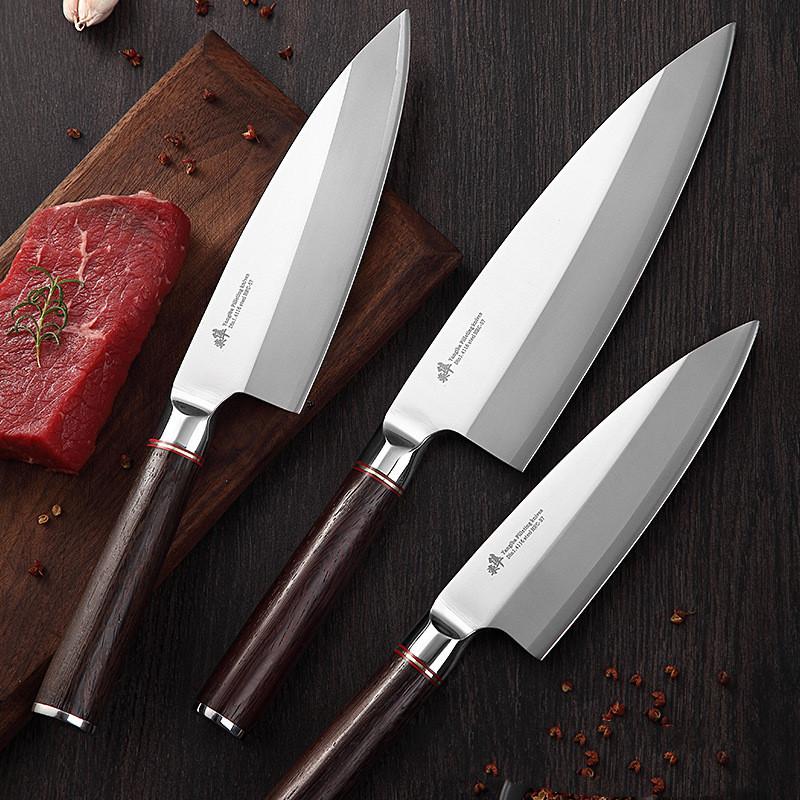
An Introduction to Forged Excellence
The allure of a professional kitchen often centers on the tools that bridge the gap between a home cook and a culinary master. When you first witness the rippling water patterns on the blade, it is easy to get lost in the sheer aesthetic beauty of the metal. However, the true magic lies beneath those swirling layers where ancient techniques meet modern metallurgical science to create an edge that feels almost supernatural. Understanding why these blades glide through a ripe tomato without any resistance requires a deep dive into the specific structural composition that defines high-quality Damascus kitchen knives today.
The Power of High Carbon Content
Sharpness is fundamentally a product of hardness because a soft metal will simply fold or dull when it encounters a dense cutting surface. Most premium blades utilize a core of high-carbon steel which allows the edge to be ground to a microscopic point that stays rigid during intense use. Because the core of Damascus kitchen knives is protected by softer outer layers, the manufacturer can use a much harder internal steel than would be possible in a mono-steel blade. This internal rigidity is the primary reason why the edge remains terrifyingly sharp even after hours of heavy dicing in a busy environment.
The Science of the Microscopic Serration
If you were to look at a high-performance blade under a powerful microscope, you would see a jagged landscape rather than a perfectly smooth line. The folding process creates a unique phenomenon where different steel alloys wear down at slightly different rates during the sharpening process. This creates a natural micro-serration along the edge of Damascus kitchen knives which helps them bite into smooth surfaces like onion skins or waxy peppers. This tiny, invisible texture acts like a miniature saw, allowing the blade to initiate a cut with significantly less downward pressure than a standard stainless steel alternative would require.
Mastering the Acute Edge Angle
The geometry of a blade is just as important as the material it is made from when determining how easily it parts through fibers. Traditional Western cutlery is often ground to a wide angle for durability, but the superior strength of layered steel allows for a much steeper grind. Many enthusiasts prefer the precision of Damascus kitchen knives because they can be sharpened to an angle of fifteen degrees or less without risking a brittle fracture. This thinner profile reduces the friction encountered during the stroke, making the knife feel significantly sharper than a thicker blade even if both have been freshly honed.
Thermal Treatment and Molecular Stability
A blade is only as good as the fire that forged it, and the heat treatment process is where the steel finds its soul. By heating the metal to precise temperatures and then quenching it rapidly, smiths lock the carbon atoms into a crystal structure that is incredibly resistant to deformation. The sophisticated heat treatment used for Damascus kitchen knives ensures that the molecular lattice is consistent from the spine down to the very tip of the edge. This stability prevents the edge from rolling over during use, which is a common frustration found with cheaper, mass-produced culinary tools.
The Role of Modern Alloy Enhancements
While traditional methods provide the foundation, modern chemistry has introduced elements like cobalt, vanadium, and molybdenum into the forging mix to enhance performance. These additions refine the grain size of the metal, creating a denser and more uniform material that can hold a refined polish. When you invest in Damascus kitchen knives you are often benefiting from these advanced alloys that offer better corrosion resistance and edge stability than historical versions. These trace elements act as a secret sauce that allows the steel to reach its maximum potential for sharpness while remaining relatively easy to maintain.
Reducing Drag with Surface Texture
Physics plays a massive role in how a knife feels during the slicing motion, particularly regarding the surface tension between the metal and the food. The iconic wavy patterns are not just for show; they create a slightly uneven surface area that prevents moist vegetables from suctioning onto the side of the blade. This reduction in "stiction" means that Damascus kitchen knives move through ingredients with a fluid grace that feels effortless to the user. By breaking the vacuum seal that often slows down a flat-ground blade, the layered steel maintains its momentum throughout the entire length of the cutting stroke.
Hand-Finished Precision and Human Touch
Machine-made blades often lack the nuanced geometry that a master sharpener can provide through hand-finishing on a series of progressively finer whetstones. Every single one of the high-end Damascus kitchen knives undergoes a rigorous manual sharpening process where the final burr is removed to reveal a mirror-polished edge. This human element ensures that the transition from the primary grind to the cutting edge is seamless and perfectly centered. A machine cannot feel the subtle variations in the steel, but a craftsman can adjust their pressure to ensure the sharpest possible result across the entire blade.
Longevity and Edge Retention Factors
A knife that is sharp for one day is a toy, but a knife that stays sharp for months is a professional tool. The laminated construction provides a "spring" effect that helps the blade absorb the shock of hitting a cutting board without losing its keenness. Because the edge of Damascus kitchen knives is supported by a resilient jacket of tougher steel, it resists the microscopic chipping that plagues other high-hardness blades. This means you spend less time at the sharpening stone and more time enjoying the effortless precision that originally drew you to this legendary style of Japanese-inspired cutlery.
Summary of the Cutting Experience
Ultimately, the legendary status of these tools is earned through a perfect harmony of metallurgical balance, expert heat treatment, and specialized geometry. When all these factors align, the result is a culinary instrument that feels like an extension of the hand rather than a heavy piece of hardware. While the aesthetics will always be a major selling point, the functional superiority of Damascus kitchen knives is what truly cements their place in the kitchens of the world's most demanding chefs. Choosing one means embracing a tradition of excellence that has been refined over centuries to achieve the absolute peak of slicing performance.
 Portuguese
 English
 Arabic
 French
 Spanish
 Deutsch
 Turkish
 Dutch
Dutch
 Italiano
 Russian
 Romaian
 Portuguese (Brazil)
 Greek
Greek