

Mastering Electric Resistance Welding: Principles, Applications, and Best Practices
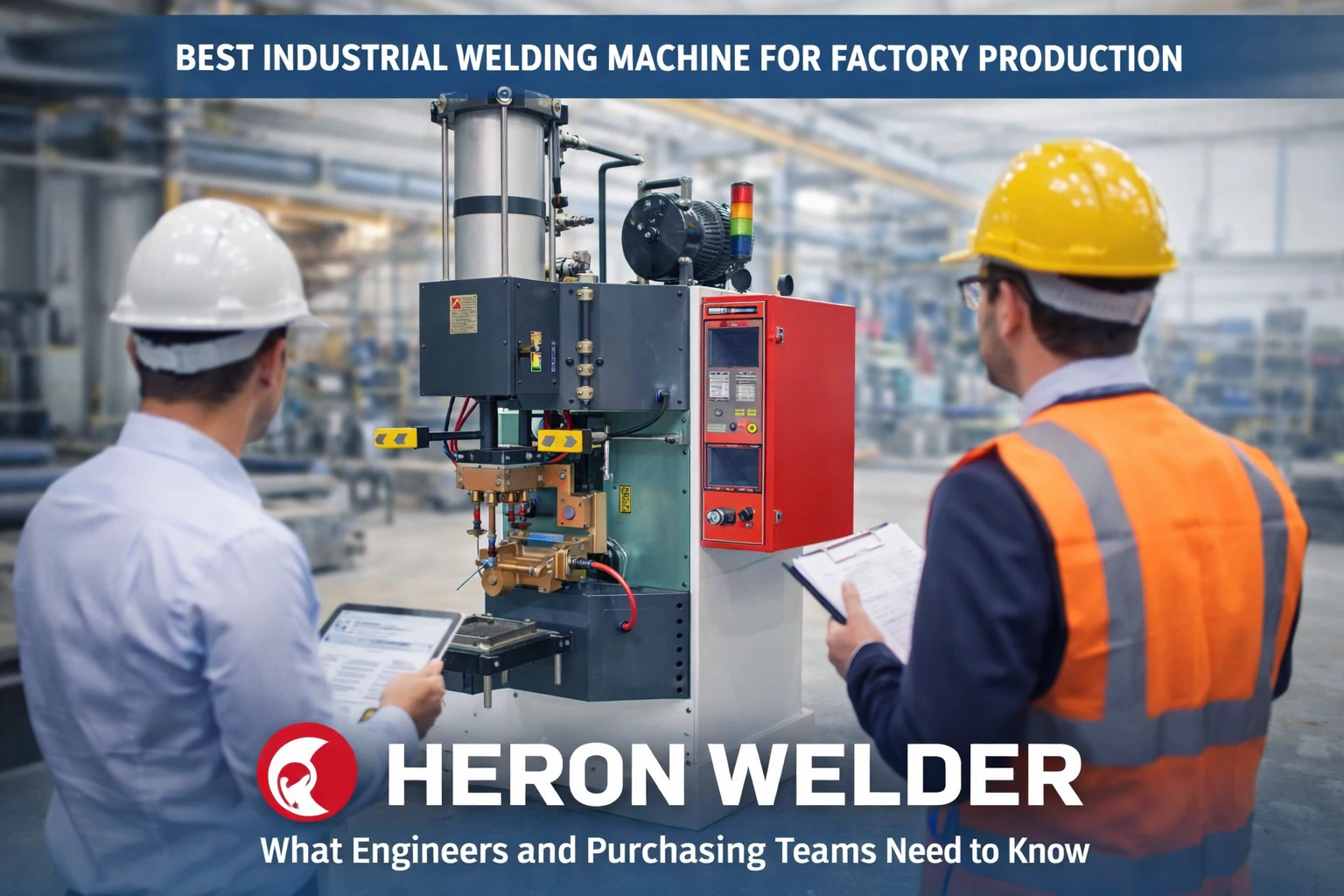
Electric resistance welding (ERW) is a cornerstone technology in modern manufacturing, enabling precise, high-speed, and repeatable joining of metals. From automotive body assembly to heavy industrial fabrication, ERW plays a vital role in improving productivity, consistency, and cost efficiency. For manufacturing engineers, OEMs, and automation integrators, understanding the nuances of electric resistance welding is key to optimizing production processes. Heron Welder, a global leader in industrial welding and metal-joining equipment, provides advanced solutions tailored to the needs of modern factories.
What is Electric Resistance Welding?
Electric resistance welding is a process where heat generated by electrical resistance is used to fuse metal surfaces. Unlike traditional welding methods that rely on external heat sources, ERW uses the inherent resistance of the materials to generate the necessary temperature for joining.
The basic principle involves passing a high electric current through the metal pieces to be joined, while applying pressure via electrodes. The combination of electrical resistance and mechanical force causes the metal to heat locally, soften, and form a solid-state weld. Once cooled under pressure, the weld achieves high strength and structural integrity.
Types of Electric Resistance Welding
ERW is a versatile process that encompasses several techniques, each suited to specific applications:
1. Spot Welding
Spot welding is one of the most common ERW methods, widely used in automotive and appliance manufacturing. It involves localized welding at discrete points where two metal sheets overlap.
Advantages:
-
Fast cycle times for mass production
-
Minimal distortion of surrounding material
-
Easy to automate with robotic systems
2. Seam Welding
Seam welding produces continuous welds, making it ideal for leak-proof containers, pipes, and fuel tanks. The electrodes roll along the seam, maintaining consistent pressure and current.
Advantages:
-
Continuous, high-strength welds
-
Suitable for cylindrical and flat workpieces
-
Compatible with automated production lines
3. Projection Welding
Projection welding uses small embossed projections on one workpiece to concentrate current and heat at specific points. This method is effective for joining complex assemblies with multiple weld points.
Advantages:
-
Multiple welds in a single operation
-
Minimal surface marking
-
Efficient for high-volume production
4. Capacitor Discharge and MFDC Welding
Capacitor discharge (CD) and medium frequency direct current (MFDC) welding provide short, high-intensity bursts of current. These techniques are commonly used for thin metals, connectors, terminals, and battery components.
Advantages:
-
Precise control for delicate parts
-
Reduced heat-affected zones
-
Energy-efficient and fast cycle times
Applications of Electric Resistance Welding
Electric resistance welding finds applications across a range of industries:
-
Automotive: Body panels, seat frames, and structural components
-
Aerospace: Lightweight assemblies and precision metal joints
-
Electronics: Battery tabs, connectors, and terminals
-
Appliance Manufacturing: Sheet metal housings, frames, and enclosures
-
Industrial Fabrication: Pipes, cylinders, and storage tanks
By integrating ERW into automated production lines, manufacturers can achieve high throughput without compromising quality.
Benefits of Electric Resistance Welding
ERW offers several advantages over traditional fusion or arc welding:
-
Consistency and Repeatability – Precise control of current, pressure, and time ensures uniform welds across hundreds or thousands of components.
-
Speed and Productivity – Fast cycle times allow high-volume manufacturing, reducing overall production costs.
-
Minimal Distortion – Localized heating minimizes warping or stress on the workpiece.
-
Automation-Friendly – ERW integrates seamlessly with robotic and automated systems for efficient mass production.
-
Material Versatility – Works on various metals, including steel, aluminum, copper, and alloys.
Best Practices for Effective ERW
To maximize the benefits of electric resistance welding, manufacturers should follow these best practices:
-
Optimize Welding Parameters: Adjust current, pressure, and duration based on material type and thickness.
-
Regular Electrode Maintenance: Ensure electrodes are clean, properly shaped, and aligned to maintain weld quality.
-
Material Preparation: Remove oxides, coatings, or contaminants to reduce resistance variability.
-
Monitoring and Control: Use advanced controllers and sensors to maintain consistent heat and pressure throughout production.
-
Integrate Automation: Robotic systems improve precision, reduce human error, and increase throughput.
Heron Welder offers advanced ERW machines, controllers, and robotic integration solutions to help manufacturers implement these best practices efficiently.
Comparing ERW with Other Welding Methods
| Feature | Electric Resistance Welding | Arc Welding | Laser Welding |
|---|---|---|---|
| Heat Source | Electrical resistance | Electric arc | Focused laser beam |
| Speed | High | Moderate | High |
| Precision | High | Moderate | Very high |
| Automation | Easily automated | Limited | Highly automated |
| Material Thickness | Thin to medium | Thin to thick | Thin |
| Distortion | Low | Moderate | Very low |
ERW excels in high-volume, thin-sheet applications where speed, precision, and repeatability are critical.
Why Choose Heron Welder for Electric Resistance Welding
Heron Welder has been at the forefront of industrial welding innovation for decades. Their expertise spans:
-
Spot, projection, and seam welding machines
-
MFDC and capacitor discharge welding solutions
-
Self-pierce riveting (FSPR) and clinching systems
-
Advanced controllers, welding guns, and automation-ready production lines
By partnering with Heron, manufacturers gain access to highly reliable, customizable solutions designed to meet specific production requirements, reduce downtime, and optimize efficiency.
FAQs About Electric Resistance Welding
1. What metals can be welded using ERW?
ERW is suitable for steel, stainless steel, aluminum, copper, and various alloys, depending on thickness and electrode configuration.
2. Can ERW be automated?
Yes, ERW is highly automation-friendly. Many production lines use robotic systems for consistent, high-volume welds.
3. How does ERW differ from MIG or TIG welding?
Unlike MIG or TIG welding, which use an external arc, ERW generates heat internally through electrical resistance, reducing distortion and improving cycle time.
4. What industries benefit most from ERW?
Automotive, electronics, appliance manufacturing, aerospace, and industrial fabrication benefit most from ERW due to its speed, precision, and repeatability.
5. How do I maintain ERW equipment for optimal performance?
Regular electrode inspection, parameter calibration, and cleaning of the welding area ensure consistent weld quality and extend machine life.
Conclusion
Electric resistance welding is a powerful, efficient, and precise metal-joining technology that drives modern manufacturing. With applications across automotive, electronics, aerospace, and industrial sectors, mastering ERW can enhance production quality, speed, and reliability. Heron Welder provides comprehensive solutions including resistance welding machines, controllers, and automated production systems to help manufacturers achieve optimal results.
Ready to enhance your production line with advanced ERW solutions? Contact Heron Welder today for a customized consultation or request a quote tailored to your manufacturing needs.
 Russian
 English
 Arabic
 French
 Spanish
 Portuguese
 Deutsch
 Turkish
 Dutch
Dutch
 Italiano
 Romaian
 Portuguese (Brazil)
 Greek
Greek