

Luminaries for Road and Street Lighting — IS 10322 (Part 5/Section 3): 2012 + Amd. 1:2015
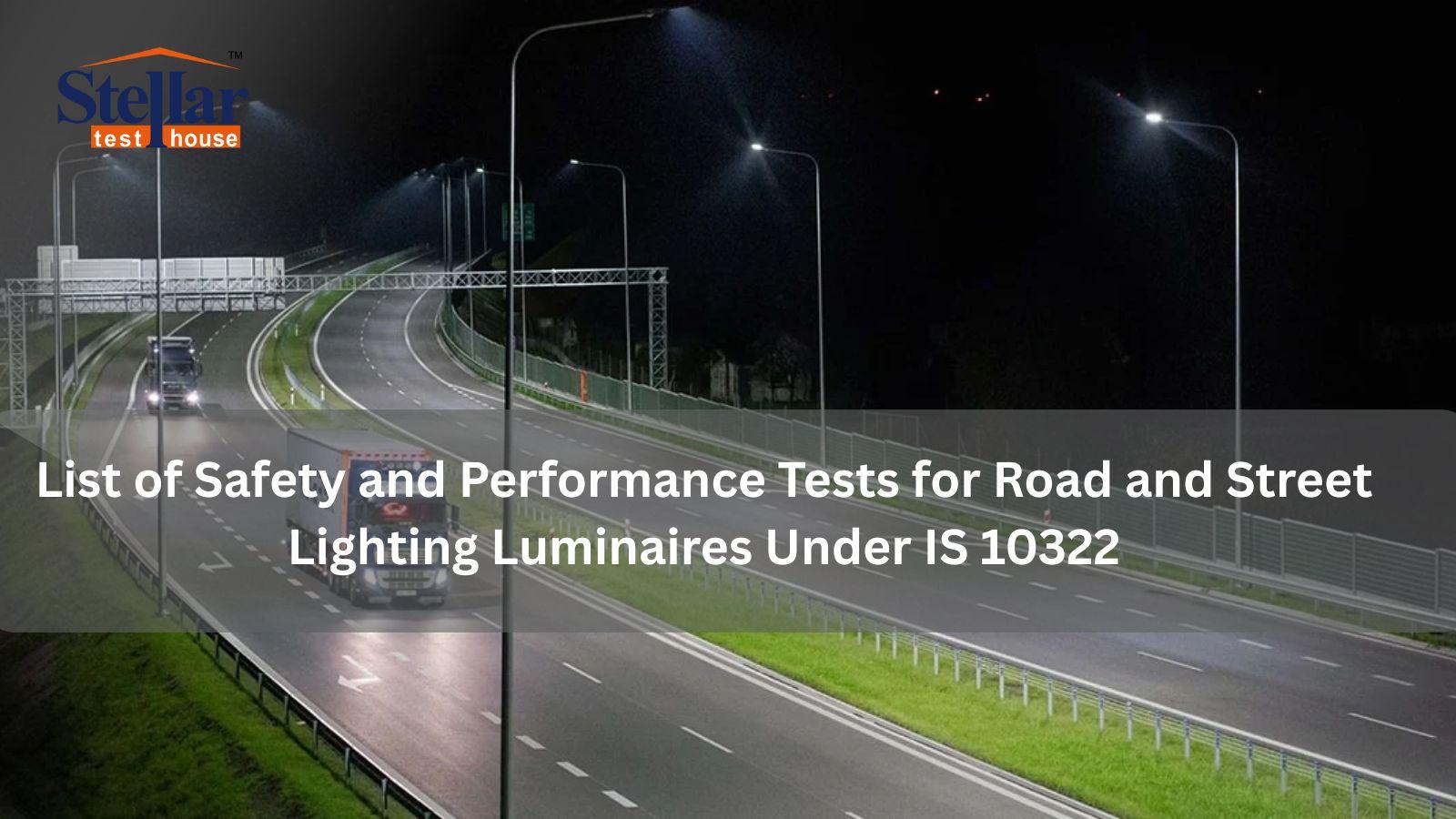
Street and road lighting plays a crucial role in ensuring public safety, smooth traffic movement, and enhanced urban aesthetics. To maintain quality, performance, and safety of lighting equipment, the Bureau of Indian Standards (BIS) has laid down specific guidelines under IS 10322 (Part 5 / Section 3): 2012 with Amendment 1: 2015. This standard specifically focuses on luminaries for road and street lighting.
Overview of IS 10322 (Part 5 / Sec 3)
IS 10322 is a multi-part Indian Standard covering different types of luminaires.
Part 5, Section 3 addresses luminaires intended for road and street lighting applications, including highways, city roads, residential streets, and public pathways.
The 2015 amendment (A1:2015) introduced clarifications and updates to improve safety, testing accuracy, and performance requirements.
Scope of the Standard
This standard applies to:
-
Road and street lighting luminaires
-
Pole-mounted or bracket-mounted lighting fixtures
-
Luminaires used with electric light sources such as HID lamps and LED modules
-
Outdoor lighting systems exposed to environmental conditions
It does not cover decorative or indoor luminaires.
Key Objectives of the Standard
The primary objectives of IS 10322 (Part 5 / Sec 3) are:
-
Ensuring electrical and mechanical safety
-
Maintaining uniform illumination and performance
-
Enhancing durability under outdoor conditions
-
Preventing hazards such as electric shock, overheating, and fire
Construction Requirements
The standard specifies that road lighting luminaires must:
-
Be made of corrosion-resistant materials
-
Have robust mechanical strength to withstand wind and vibration
-
Provide adequate ingress protection (IP rating) against dust and water
-
Ensure proper enclosure for live parts to prevent accidental contact
Electrical Safety Requirements
To ensure safe operation, the luminaires must comply with:
-
Proper earthing provisions
-
Adequate insulation resistance
-
Protection against electric shock
-
Temperature rise limits for components during operation
All wiring and internal connections must be secure and suitable for outdoor use.
Photometric and Performance Requirements
The luminaires are required to:
-
Deliver uniform light distribution suitable for road visibility
-
Minimize glare for drivers and pedestrians
-
Maintain stable performance over prolonged usage
-
Support efficient light output with minimal losses
These requirements help improve road safety, especially during night-time and adverse weather conditions.
Environmental Protection
Since road luminaires are exposed to harsh environments, the standard mandates:
-
Resistance to rain, humidity, and dust
-
Protection against corrosion due to pollution and coastal conditions
-
Adequate sealing to ensure long service life
Testing and Compliance
Luminaires must undergo various tests, including:
-
Electrical strength test
-
Insulation resistance test
-
Temperature rise test
-
Mechanical strength and impact resistance tests
-
Ingress protection verification
Compliance with IS 10322 (Part 5 / Sec 3) ensures the product is safe, reliable, and fit for long-term outdoor use.
Importance of the 2015 Amendment (A1:2015)
The amendment introduced improvements such as:
-
Updated testing methods
-
Clarifications on construction details
-
Alignment with modern lighting technologies, including LEDs
-
Enhanced safety provisions
These updates ensure the standard remains relevant with evolving lighting systems.
Conclusion
IS 10322 (Part 5 / Section 3): 2012 + A1:2015 is a vital Indian Standard that ensures safe, efficient, and durable road and street lighting luminaires. Compliance with this standard is essential for manufacturers, testing laboratories, and government bodies involved in public lighting projects.
 Turkish
 English
 Arabic
 French
 Spanish
 Portuguese
 Deutsch
 Dutch
Dutch
 Italiano
 Russian
 Romaian
 Portuguese (Brazil)
 Greek
Greek