

How White Label Mobile Apps Help Small Businesses Compete with Tech Giants
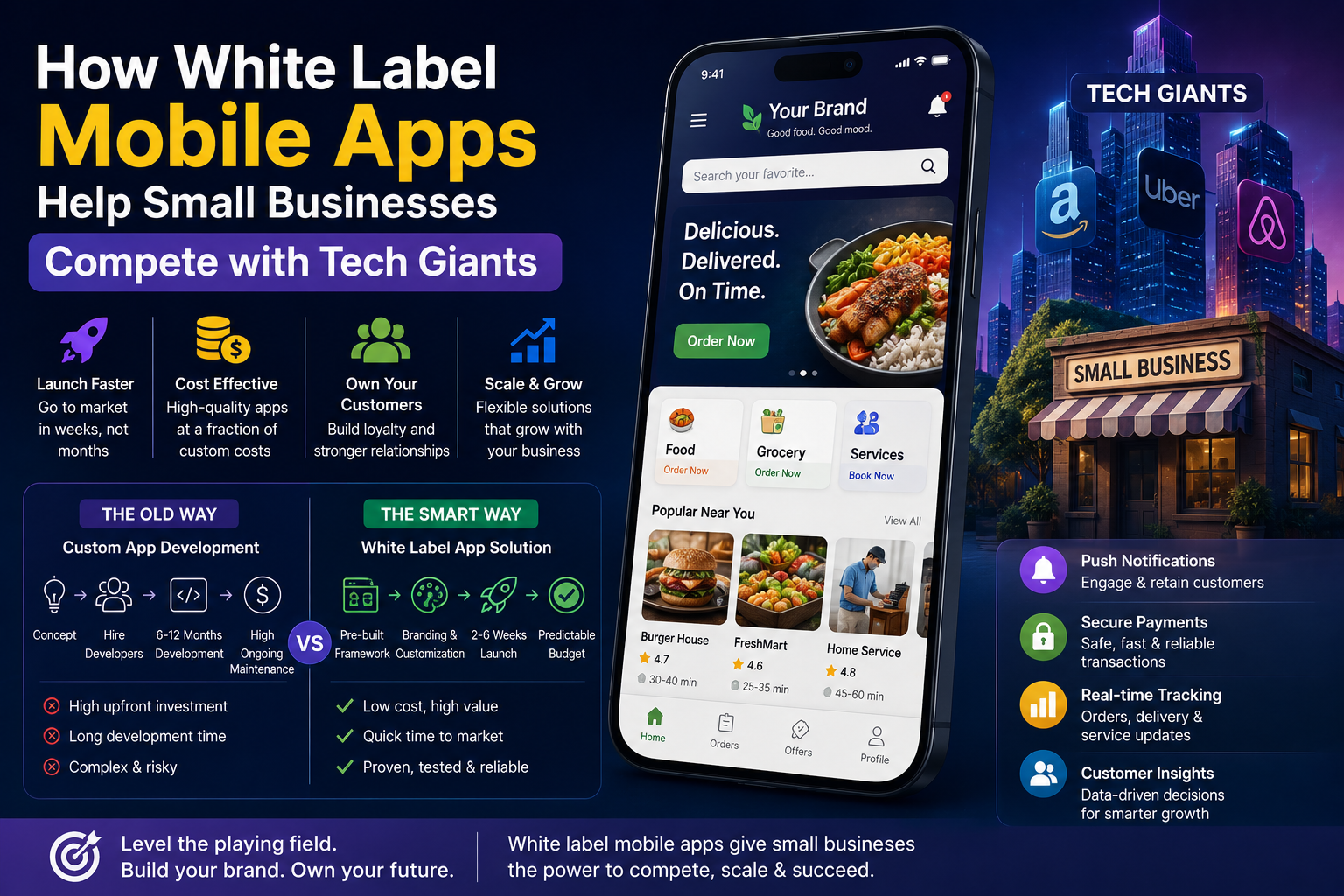
In the modern digital economy, a dedicated mobile application is no longer a luxury reserved for multi-billion-dollar corporations. Consumers spend several hours daily on their mobile devices, and a significant portion of that time is concentrated within applications. For small and medium-sized enterprises (SMEs), establishing a direct mobile presence is essential to build customer loyalty, streamline transactions, and maintain visibility in a crowded marketplace.
However, building a custom mobile application from scratch presents massive financial and technical hurdles. Developing a bespoke app typically requires months of planning, hiring specialized engineering teams, and allocating tens of thousands of dollars for development, testing, and launch. For a local retailer, service provider, or independent restaurant, these resource requirements can feel insurmountable.
This is where white label mobile applications change the landscape. A white label app is a pre-built, fully functional software solution developed by a third party that a business can purchase, rebrand, and customize with its own logo, colors, and content. By utilizing this approach, small businesses can deploy high-quality, native iOS and Android applications at a fraction of the traditional cost and time.
Bridging the Digital Divide
Tech giants dominate their respective industries because of their deep technological infrastructure. Large e-commerce platforms, third-party delivery networks, and massive service booking portals retain users by offering seamless, personalized, and friction-free mobile experiences. When small businesses rely solely on third-party aggregators, they often face high commission fees and lose control over their customer relationships and data.
Traditional Custom App Development Model:
[Concept] ➔ [Hire Devs] ➔ [6-12 Months Development] ➔ [High Upfront Capital] ➔ [Maintenance Overhead]

White Label App Deployment Model:
[Pre-Built Framework] ➔ [Branding & UI Customization] ➔ [2-6 Weeks Launch] ➔ [Predictable Budget]
White label software levels the playing field. It provides small operations with access to the exact same features that make enterprise apps successful: push notifications, integrated loyalty programs, secure mobile payments, and real-time order or service tracking. Rather than building these complex systems from the ground up, businesses can select a solution that has already been refined, tested, and optimized for user experience.
Ready-Made Solutions Across Diverse Sectors
One of the greatest strengths of the white label model is its versatility. Different sectors have vastly different operational workflows; a salon needs a robust appointment calendar, whereas a local grocery store requires real-time inventory management and delivery dispatch.
The availability of readymade apps on sale for multiple industries allows business owners to find a platform tailored precisely to their operational model. Rather than spending months teaching a generalist development team about the nuances of a specific sector, owners can adopt a framework that has already solved common industry pain points.
Key Verticals Benefiting From Pre-Built Frameworks
| Industry | Core Feature Requirements | Operational Impact |
| Food & Beverage | Digital menus, mobile ordering, delivery dispatch | Reclaims profits by bypassing high third-party marketplace commissions. |
| Retail & E-commerce | Product catalogs, shopping carts, secure checkout gateways | Provides a localized alternative to giant online retail platforms. |
| Service-Based | Real-time scheduling, booking management, staff dispatch | Reduces administrative back-and-forth and automates appointments. |
| Fitness & Wellness | Class scheduling, membership portals, video content streaming | Keeps members engaged with direct communication and automated reminders. |
By utilizing industry-specific solutions, a business avoids the generic "one-size-fits-all" feel that older mobile builders used to produce. Modern white label applications offer deep aesthetic customization, ensuring the final product matches the unique visual identity, voice, and values of the brand.
Financial Efficiency and Speed to Market
For small organizations, cash flow and speed are critical. Spending six months to a year waiting for a custom software build means missing out on immediate customer engagement and market opportunities. Additionally, custom software development regularly runs over budget due to scope creep, changing APIs, and unexpected technical obstacles.
White label applications solve both problems simultaneously:
-
Drastically Lower Capital Investment: Because the underlying codebase is shared across multiple licensees, the initial acquisition cost is exceptionally low. This makes digital transformation accessible to businesses operating on lean budgets.
-
Rapid Deployment: A custom app takes months to code, test, and get approved by major app stores. A white label solution can often be configured, branded, and launched within a few weeks, allowing a business to respond immediately to competitor moves.
-
Continuous Maintenance and Compliance: Operating systems update frequently, and security standards shift constantly. Reliable white label providers handle backend maintenance, security patches, and compatibility updates, freeing the business owner from ongoing technical worries.
Reclaiming Customer Relationships and Data
When a small business relies on global aggregation platforms to connect with customers, they pay a double price: a financial cut on every transaction and the loss of customer touchpoints. Aggregators own the user relationship, meaning the small business cannot directly remarket to their own clients or view detailed behavioral data.
A branded app shifts ownership back to the business. Every download represents a dedicated channel to interact with a highly interested consumer.
Harnessing Direct Marketing Tools
With a proprietary app, businesses can leverage push notifications to announce flash sales, share personalized rewards, or remind users of abandoned carts. Push notifications boast significantly higher open and engagement rates compared to traditional email marketing, allowing local brands to stay top-of-mind.
Furthermore, first-party data collection allows small businesses to analyze purchasing patterns, popular booking hours, and product popularity. This intelligence helps optimize inventory, refine marketing strategies, and improve overall service delivery without needing expensive consulting services.
Finding the Right Balance: Custom vs. White Label
While the benefits of pre-built apps are clear, business owners must navigate the transition carefully. Standard white label solutions are highly efficient for established business models where standard features are expected. However, if a business relies on a highly unique proprietary process, some level of custom logic may be necessary.
To understand the full spectrum of options, from rapid template deployments to hybrid development models, viewing an on-demand development complete guide can help decision-makers evaluate security, scalability, licensing structures, and long-term technical support before committing to a provider. This ensuring that the selected platform can scale smoothly as the business expands.
Ultimately, the choice to adopt a white label mobile application is about agility and resource management. By opting for a reliable, pre-built framework, small businesses can avoid the steep learning curves and financial risks of software development. Instead, they can focus their energy where it matters most: delivering exceptional products, building strong communities, and providing personalized customer service that tech giants simply cannot replicate.
 Turkish
 English
 Arabic
 French
 Spanish
 Portuguese
 Deutsch
 Dutch
Dutch
 Italiano
 Russian
 Romaian
 Portuguese (Brazil)
 Greek
Greek