

Automotive Temperature Sensor Market Reaching US$ 19.88 Billion by 2034
The automotive industry is undergoing an unprecedented technological evolution, moving swiftly from conventional internal combustion engines (ICE) toward advanced electrification, autonomous driving, and deep digital connectivity. At the heart of this radical structural transformation is a sophisticated array of sensors that monitor and optimize every vital function within a vehicle. Among these components, temperature sensors have emerged as a critical baseline technology. They are responsible for protecting high-voltage battery systems, maintaining optimal cabin climates, managing engine efficiency, and safeguarding powertrain components from severe thermal stress.
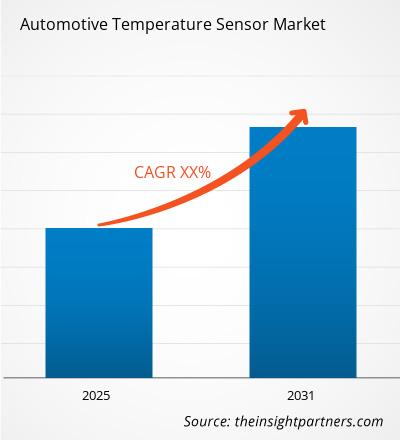
According to an exhaustive market analysis by The Insight Partners, the global Automotive Temperature Sensor Market size is projected to reach US$ 19.88 billion by 2034 from US$ 13.65 billion in 2025. The market is anticipated to register a CAGR of 4.81% during the forecast period 2026-2034. This steady economic expansion reflects an accelerating volume of sensor installations per vehicle, particularly driven by high-voltage architectures and stringent environmental mandates worldwide.
Primary Catalysts Fueling Market Growth
The robust growth trajectory of the automotive temperature sensor market is propelled by three primary industry developments:
1. Rapid Vehicle Electrification and Thermal Management Barriers
The widespread transition to electric vehicles (EVs) has completely overhauled vehicle thermal dynamics. Unlike a standard ICE vehicle that utilizes basic coolant sensors, a modern Battery Electric Vehicle (BEV) contains nearly three times the number of thermal sensing nodes frequently exceeding 100 to 150 points per car.
Lithium-ion battery packs require tight thermal control, performing efficiently within a strict sweet spot of 15°C to 35°C. Operating above or below this range can drastically reduce a battery’s lifespan, hamper charging speeds, or even risk thermal runaway. Consequently, advanced Battery Management Systems (BMS) depend heavily on distributed contact thermistors and semiconductor-based IC sensors to track temperature changes at the individual cell level.
2. Stringent Global Emission Rules and Powertrain Efficiency
Even as EVs gain substantial momentum, internal combustion engines and complex plug-in hybrid (PHEV) platforms continue to hold notable market shares globally. Governments across regions continue to implement aggressive emissions frameworks including the Euro 6d/Euro 7 standards in Europe, EPA Tier 3/Tier 4 rules in North America, and National VI regulations in China.
To comply with these rules and avoid heavy financial penalties, automakers depend on real-time temperature data from engine blocks, exhaust gas recirculation (EGR) systems, and turbochargers. Accurate data ensures perfect fuel combustion, maximizes after-treatment efficiency, and ensures low-emission operations across volatile real-world driving scenarios.
Get a PDF Sample– https://www.theinsightpartners.com/sample/TIPRE00007209
3. Sophisticated In-Cabin Comfort and Smart HVAC Systems
Consumer expectations for high-end, individualized experiences have pushed premium passenger cars to integrate highly targeted cabin climate ecosystems. Modern vehicles employ zonal HVAC layouts using multi-sensor setups. These systems continually assess air temperature, solar load, and relative humidity to dynamically modulate air-jets, premium seat heating pads, and individual steering warmers. This specialized environment maintains a premium level of comfort while actively optimizing energy usage a critical feature for extending the driving range of electric platforms.
Competitive Landscape and Leading Innovation Hubs
The automotive temperature sensor supply chain is intensely competitive and dominated by global Tier-1 automotive suppliers, semiconductor specialists, and electronics innovators. These organizations heavily prioritize research and development to introduce highly miniaturized, electromagnetic interference (EMI) resistant, and digital-ready integrated circuits (ICs) that align with the next wave of centralized automotive compute configurations.
Key players actively driving innovation and shaping the future of the automotive temperature sensor market include:
-
Analog Devices, Inc.
-
BorgWarner Inc.
-
Bosch Auto Parts
-
Continental AG
-
Microchip Technology Inc.
-
Murata Manufacturing Co., Ltd.
-
NXP Semiconductors
-
Sensata Technologies, Inc.
-
TE Connectivity
-
Texas Instruments Incorporated
These industry leaders focus heavily on structural partnerships with major automotive manufacturers (OEMs), product line expansions, and material science developments to deliver high-durability sensors capable of enduring severe automotive environments.
Future Outlook
The future outlook for the global automotive temperature sensor market points toward a technology-driven landscape defined by next-generation vehicle layouts and advanced sensor fusion. As the industry moves closer to deploying commercial solid-state batteries and high-power ultra-fast charging infrastructures, the demand for extreme spatial granularity in thermal tracking will multiply. This shift will accelerate a transition from legacy NTC thermistors toward advanced, digitally calibrated semiconductor temperature ICs and non-contact infrared sensors capable of transmitting real-time data over high-speed networks. Furthermore, as software-defined vehicles (SDVs) mature, temperature sensor inputs will increasingly combine with predictive AI algorithms to forecast mechanical components' wear, prevent critical electronics failures, and elevate vehicle efficiency to new heights. By providing a crucial layer of data safety, automotive temperature sensors will remain a cornerpiece of sustainable, intelligent mobility.
Related Reports-
Automotive Exhaust Sensor Market
Automotive Fuel Quality Sensor Market
About Us
The Insight Partners is a one-stop industry research provider of actionable intelligence. We help our clients in getting solutions to their research requirements through our syndicated and consulting research services. We specialize in industries such as Semiconductor and Electronics, Aerospace and Defense, Automotive and Transportation, Biotechnology, Healthcare IT, Manufacturing and Construction, Medical Devices, Technology, Media, and Telecommunications, as well as chemicals and Materials.
Contact Us
If you have any queries about this report or if you would like further information, don’t hesitate to get in touch with us:
Contact Person: Ankit Mathur
E-mail: ankit.mathur@theinsightpartners.com
 Portuguese
 English
 Arabic
 French
 Spanish
 Deutsch
 Turkish
 Dutch
Dutch
 Italiano
 Russian
 Romaian
 Portuguese (Brazil)
 Greek
Greek