

Military Night Vision System Market Analysis Foresees Rise to 14.73 Billion at 5.54% CAGR
Modern warfare is no longer constrained by the setting of the sun. The ability to dominate the battlespace under the cover of darkness has evolved from a tactical advantage into an absolute strategic necessity. As global defense forces prioritize 24/7 operational readiness and asymmetric warfare capabilities, the technologies that enable soldiers to see, target, and navigate in zero-light environments are experiencing unprecedented demand.
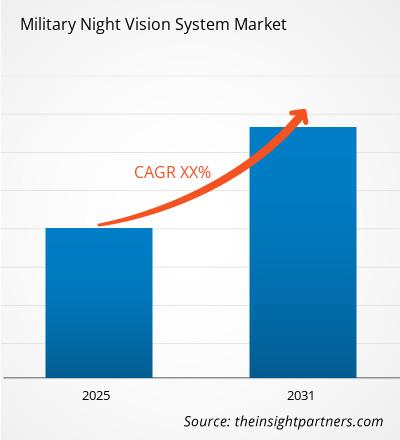
According to a comprehensive study by The Insight Partners, the global Military Night Vision System Market size is projected to reach US$ 14.73 billion by 2034 from US$ 9.57 billion in 2025. This steady growth is anticipated to register a compound annual growth rate (CAGR) of 5.54% during the forecast period from 2026 to 2034.
Primary Catalysts Driving Market Expansion
Several macroeconomic and geopolitical dynamics are converging to fuel the growth of the military night vision market. Chief among these is the escalating level of geopolitical tension worldwide. Border disputes, counter-terrorism operations, and the rise of gray-zone warfare have forced nations to modernize their infantry and specialized units. Defense departments are heavily investing in personal soldier equipment to maximize survivability and combat lethality.
Furthermore, night-time missions are statistically preferred for covert operations, reconnaissance, and surgical strikes. To execute these safely, defense forces require systems that offer maximum clarity, extended range, and minimal latency. This has shifted the market focus from basic image intensification to advanced digital and hybrid fusion systems.
Technological Shifts: From Intensification to Sensor Fusion
The military night vision landscape is undergoing a massive technological transition. Traditionally, systems relied purely on Image Intensification (I2) tubes, which amplify ambient light (like starlight or moonlight) to create a visible image. While newer Generation 3 and Generation 4 I2 systems are incredibly sensitive and power-efficient, they struggle in absolute darkness, such as deep caves or subterranean structures.
To mitigate this, the industry is rapidly adopting Sensor Fusion Technology. Fusion systems combine traditional image intensification with thermal imaging (infrared sensors that detect heat signatures). By overlaying a thermal outline onto a high-resolution ambient image, soldiers can spot a hidden enemy behind foliage or camouflage while maintaining clear environmental awareness.
Additionally, the integration of Augmented Reality (AR) overlays onto night vision goggles allows real-time tactical data such as navigation waypoints, blue-force tracking, and target markers to be projected directly into the operator's field of view.
Get a PDF Sample– https://www.theinsightpartners.com/sample/TIPRE00006030
Competitive Landscape and Key Players
The military night vision system market is highly competitive, characterized by established defense giants and specialized electro-optical component manufacturers. These entities focus on securing long-term government contracts, reducing the size, weight, and power (SWaP) metrics of devices, and improving digital resolution.
Prominent players driving innovation and holding significant market share include:
-
ATN Corp – Renowned for commercial and tactical smart digital night vision and thermal optics.
-
BAE Systems – A global defense leader providing advanced integrated helmet systems and digital night vision technologies.
-
Bharat Electronics Limited (BEL) – A premier Indian defense PSU supplying night vision goggles, weapon sights, and binoculars to domestic and international forces.
-
Collins Aerospace – Specializes in high-performance airborne and ground electro-optical systems.
-
Elbit Systems Ltd. – An international defense electronics company at the forefront of sophisticated helmet-mounted displays and fusion goggles.
-
FLIR Systems, Inc. (A Teledyne Technologies Company) – Global pioneer in thermal imaging sensors and infrared surveillance systems.
-
Intevac, Inc. – Renowned for its digital night vision sensors, particularly low-light CMOS technology utilized in military aviation.
-
L3Harris Technologies, Inc. – A dominant supplier of next-generation night vision goggles (such as the ENVG-B) featuring integrated thermal and AR capabilities for the US military.
-
Photonis Technologies SAS – A crucial manufacturer of high-performance image intensifier tubes used by various global device assemblers.
-
Thales Group – A European defense leader providing cutting-edge, lightweight optronics and night vision sights for dismounted soldiers.
Segmental and Regional Insights
Geographically, North America currently holds a dominant position in the market, primarily driven by the massive procurement budgets of the US Department of Defense and continuous soldier modernization programs. However, the Asia-Pacific region is poised to display the fastest growth rate over the forecast period. Countries like India, China, and South Korea are aggressively updating their military hardware to counter local security threats, creating a highly lucrative environment for domestic and foreign electro-optics manufacturers.
In terms of systems, helmet-mounted devices and weapon-mounted sights remain the highest-volume segments, though vehicular and airborne night-vision installations are seeing stable growth to support armored units and nighttime aviation logistics.
Future Outlook
The future of the military night vision system market lies in full digitalization and software-defined optics. As standard analog tubes gradually give way to digital low-light sensors, future systems will easily integrate into broader battlefield management networks. We can expect artificial intelligence (AI) to play a crucial role at the edge, offering automatic target recognition (ATR) and filtering out environmental noise like smoke, dust, or sudden flash blindness. As manufacturers successfully lower the cost of sensor fusion and digital components, these advanced capabilities will transition from elite special forces down to standard infantry, ensuring that tomorrow's military forces maintain unchallenged supremacy in the dark.
Related Reports-
Enhanced Flight Vision System Market
About Us
The Insight Partners is a one-stop industry research provider of actionable intelligence. We help our clients in getting solutions to their research requirements through our syndicated and consulting research services. We specialize in industries such as Semiconductor and Electronics, Aerospace and Defense, Automotive and Transportation, Biotechnology, Healthcare IT, Manufacturing and Construction, Medical Devices, Technology, Media, and Telecommunications, as well as chemicals and Materials.
Contact Us
If you have any queries about this report or if you would like further information, don’t hesitate to get in touch with us:
Contact Person: Ankit Mathur
E-mail: ankit.mathur@theinsightpartners.com
Phone: +1-646-491-9876
 French
 English
 Arabic
 Spanish
 Portuguese
 Deutsch
 Turkish
 Dutch
Dutch
 Italiano
 Russian
 Romaian
 Portuguese (Brazil)
 Greek
Greek