

The Pilgrimage of Pain: How Silksong's Boss Runbacks Split the Kingdom
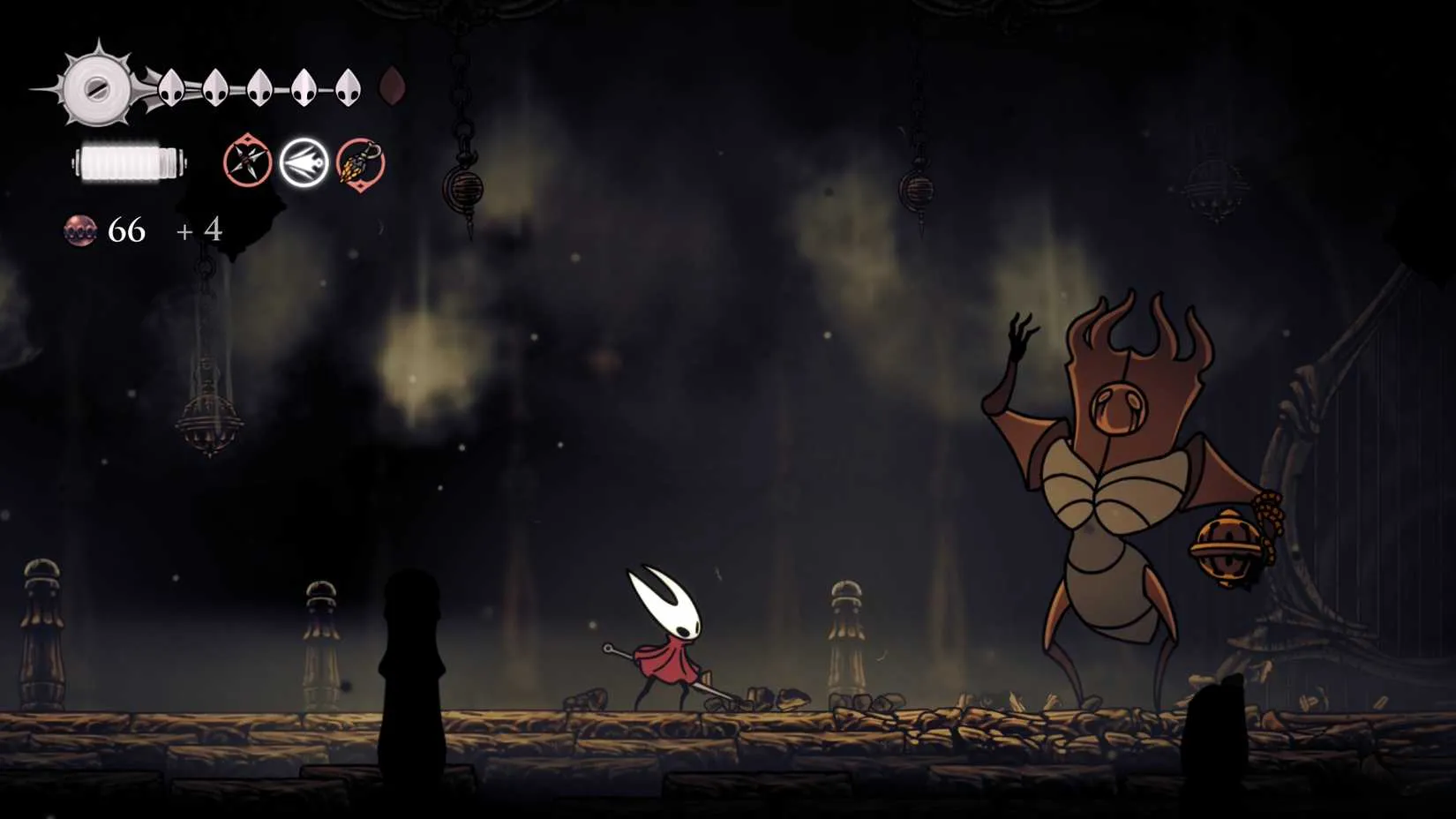
Aria’s fingers trembled over the controller as the screen faded to black. Somewhere in the crimson-lit depths of the Citadel, her character collapsed under the Last Judge’s gavel for the eleventh time. The respawn chime was almost mocking—a soft harp note that signaled not respite, but the start of another pilgrimage. She set her jaw and leaned forward. The runback had become a ritual, one she was beginning to dread as much as the boss itself.
In the kingdom of Pharloom, death was never truly an end, but a rewinding of thread through a needle’s eye. Every attempt on the Last Judge required Hornet to retrace a labyrinthine path from the only nearby bench, a journey that, even when executed flawlessly, devoured ninety precious seconds. It began with a needle-lunge across a spiked chasm that never grew less menacing, followed by a vertical climb through a shaft where floating bell-turrets hummed with malice. One mis-timed wall-jump, one accidental brush with a stray projectile, and the entire sequence would dissolve into another death screen, forcing Aria to start over from that cold stone seat, her resolve fraying like old silk.
The Last Judge runback had become a legend by the autumn of 2026, a topic that cleaved the player base as cleanly as a nail through a husk. Some, like Aria’s friend Marlow, defended it with the fervor of a cartographer who had finally mapped every treacherous shortcut. “It’s not padding,” he insisted over voice chat. “That runback is a miniature gauntlet that teaches you movement mastery. By the time you can reach the boss without taking damage, you’ve already internalized Hornet’s entire toolkit—dashing through gaps, pogoing off enemies, using the Silk Storm to hover over spikes. It’s a silent mentor.” For Marlow and his ilk, the trek back to the Last Judge’s lair was the grindstone upon which skill was sharpened, each journey a lesson in precision that the boss fight would demand. They saw the runback as an inseparable thread in the game’s fabric, a consequence that gave weight to every death.
Yet for every player who embraced this philosophy, three others saw the runback as a crack in the stained-glass cathedral of Silksong’s design. Aria found no meditation in the repetition; she felt like a debtor forced to walk the same prison corridor before each audience with a merciless warden. The cost of failure was already steep—Rust shards, the currency she had painstakingly gathered, scattered on the arena floor like shattered pearls from a broken necklace, often unrecoverable if she died en route. Adding a minute-and-a-half commute to that loss transformed the game from a demanding dance into a slog through molasses. Critics online likened it to “paying a toll of tedium before the real fight even begins,” and the Last Judge was merely the most infamous example. Throughout Pharloom, benighted benches were trapped with hidden mechanisms that would eject Hornet into harm’s way, and ambushes that felt less like tactical surprises and more like the game yanking the floor from beneath a player already wobbling on a tightrope.
These design choices, taken together, created a texture of difficulty that many called “inflated.” The runbacks were the most visible scab, constantly picked at by those who argued that Silksong’s combat was already grueling enough without the repeated geography lessons. Dying on the way back to a boss—perhaps to a stupid misjump or an ambush that hadn’t been there before—was a special kind of agony, one that could turn a serene evening into a controller-snapping storm. Aria had tasted it herself: once, she had navigated the entire runback flawlessly, only to be knocked into a pit by a hidden diving enemy two steps from the boss door. She sat in the silence of her room, watching the death screen, feeling as if the game had extracted another payment she hadn’t budgeted for.
The conversation shifted with the release of Patch 4.3 earlier that summer. Team Cherry, responding to the cacophony of feedback, introduced experimental adjustments: a new “dreamgate” item that could be placed outside certain boss arenas, and a reduction of enemy density on a handful of notorious runback paths. The beta image of that patch, with its cleaner interface and subtle quality-of-life tweaks, circulated through forums like a rumor of peace. Yet many purists recoiled. They argued that removing runbacks was like sanding the edges off a sculpture—the piece lost its character. In their view, the friction was the point, and Hornet’s journey was meant to be a trial of endurance as much as skill.
Even with the patch, the Last Judge’s runback remained a rite of passage. Marlow considered the dreamgate a crutch, while Aria, after fifty attempts, finally caved and used it. The relief was immense, but it was tinged with something unexpected: an absence. She had spent so many hours tracing that path that its rhythms had become part of her muscle memory, a strange ghost limb. Without the runback, the victory over the Last Judge felt slightly hollowed, as though she had skipped a verse of a song she’d been forced to learn by heart.
That ambiguity is precisely why the debate refuses to die. Silksong’s boss runbacks, like the charcoal sketch beneath a finished painting, are hidden structures that shape the entire experience. Some see them as the albatross around the game’s neck; others, as a crucible that tempers the player’s spirit. In the flickering light of a gaming community that feeds on passion and pain, this division is likely to persist. Aria, now deep into the final chapters of Pharloom, passes each bench with a wary eye, knowing that the next boss will ask her the same question: Is the journey worth the ordeal? Her answer changes with every death, and that, perhaps, is exactly what Silksong intended all along.
As players navigate the intricate paths and challenges within Silksong, the wider gaming community continues to explore ways to enhance their experiences. Whether it's through strategic modifications or finding the best deals on gaming accessories, the journey doesn't end with the last boss. For those looking to equip themselves with the latest gear or simply find value deals on new releases, it's beneficial to explore various options that can enhance your gameplay. Enthusiasts often seek out resources to make informed decisions about their purchases.
If you're interested in optimizing your gaming setup or ensuring that you're getting the best deal on the latest titles, it's worthwhile to consider various avenues for price comparison. Gamers who wish to secure the best prices on gaming essentials can compare prices here to ensure they are investing wisely in their gaming experiences. This proactive approach allows players to focus more on the adventures within their games, assured they've made savvy purchasing decisions.

 English
 Arabic
 French
 Spanish
 Portuguese
 Turkish
 Dutch
Dutch
 Italiano
 Russian
 Romaian
 Portuguese (Brazil)
 Greek
Greek