

How to Choose the Right Waterproofing Specialist for Your Building
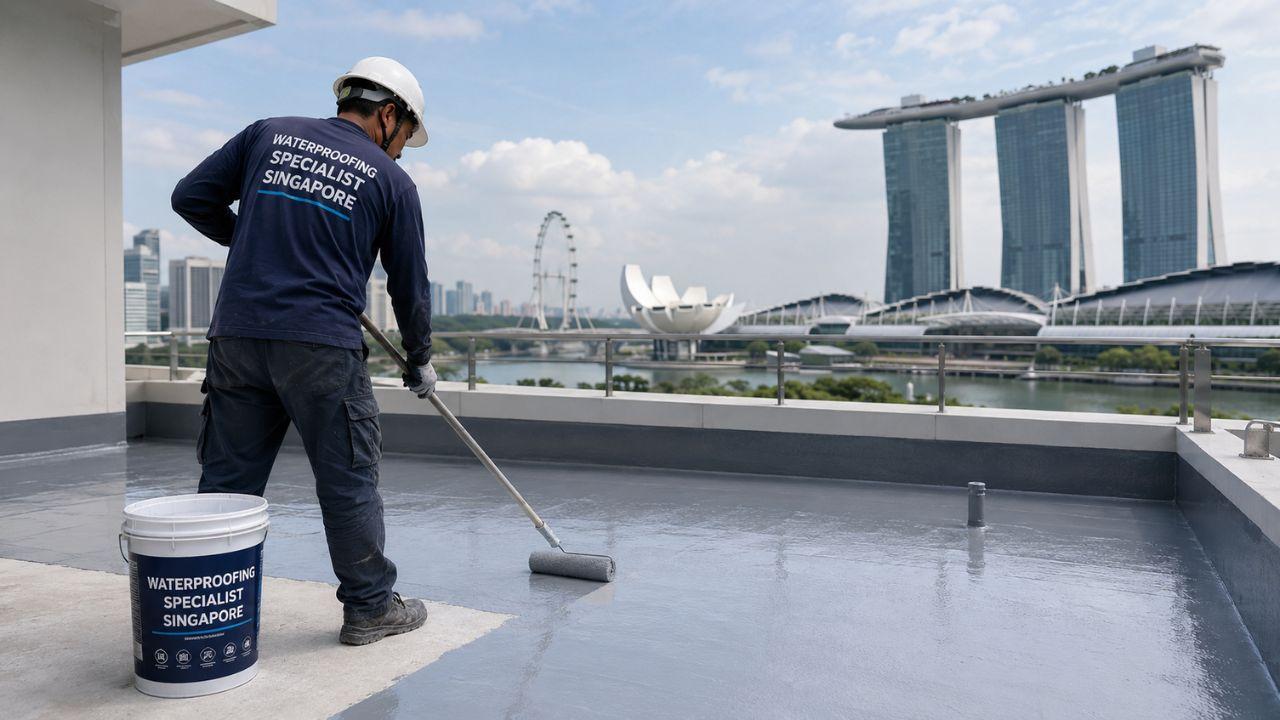
Choosing the right waterproofing specialist can protect your building from recurring leaks, mould, and structural deterioration. Allseal Waterproofing PTE Ltd helps property owners assess water-ingress problems and identify suitable solutions based on the affected area and building condition.
Why Choosing the Right Waterproofing Contractor Matters
Waterproofing is not simply a matter of applying a coating over a damp wall. Effective work begins with identifying where water is entering and why the existing protection has failed.
The visible stain may not be located directly below the source. Water can travel through concrete slabs, wall cavities, ceiling spaces, pipes, joints, and structural elements before becoming noticeable.
Selecting an unsuitable contractor may lead to temporary repairs that hide the symptoms without stopping the leak. The stain may disappear briefly and return during the next period of heavy rain.
The right contractor should focus on:
-
Accurate leak diagnosis
-
Appropriate material selection
-
Proper surface preparation
-
Careful treatment of joints and cracks
-
Safe working procedures
-
Suitable testing
-
Clear documentation
-
Practical maintenance advice
These factors provide a stronger basis for selection than advertising claims alone.
Identify the Type of Waterproofing Problem
Before comparing contractors, try to understand the general nature of the problem.
You do not need to diagnose the leak yourself. However, knowing when and where it appears can help the contractor investigate more effectively.
Record details such as:
-
When the leak first appeared
-
Whether it occurs during rain
-
Whether it appears after bathroom use
-
Whether the damp area is spreading
-
Whether previous repairs were attempted
-
Whether nearby plumbing is present
-
Whether renovation work was recently completed
Photographs and videos can also be useful, especially when the leak is active.
Roof Leakage
Roof leakage may result from damaged membranes, concrete cracks, deteriorated sealants, defective joints, blocked outlets, or water pooling on the surface.
The contractor should inspect the surrounding roof area rather than treating only the location above the visible ceiling stain.
Bathroom Leakage
Bathroom leaks may come from failed waterproofing membranes, damaged grout, deteriorated sealants, plumbing defects, floor traps, or weak floor-to-wall junctions.
The contractor must determine whether the problem involves waterproofing, plumbing, or both.
Balcony and Terrace Leakage
Balconies and terraces are exposed to rain, sunlight, foot traffic, and building movement.
Common weak points include cracks, drainage outlets, door thresholds, tile joints, edges, and wall junctions.
External Wall Seepage
Rainwater may penetrate external walls through cracks, porous surfaces, defective façade coatings, window joints, and service openings.
Painting the interior wall will not stop water entering from outside.
Basement Water Ingress
Basements and below-ground areas may experience moisture from surrounding soil and water pressure.
Treatment may require crack injection, joint sealing, internal barrier systems, drainage improvement, or a combination of methods.
Look for Relevant Technical Experience
Not every construction or renovation company has specialist waterproofing knowledge.
A contractor may be experienced in painting or tiling but have limited knowledge of membranes, crack injection, roof detailing, or water-tightness testing.
Ask whether the company has handled similar projects involving:
-
The same type of property
-
The same affected area
-
Similar building materials
-
Comparable access conditions
-
The same leakage pattern
-
Similar drainage problems
Relevant experience helps a contractor recognise common failure points and recommend a practical repair method.
Allseal Waterproofing PTE Ltd can be considered by property owners seeking a company focused on waterproofing and leakage-related work. The final decision should still be based on the inspection, proposed method, written scope, and project requirements.
Request a Detailed Site Inspection
A reliable waterproofing specialist should not recommend major work based only on assumptions.
A proper inspection may include:
-
Visual examination
-
Moisture detection
-
Crack assessment
-
Joint and sealant inspection
-
Roof drainage checks
-
Controlled water testing
-
Flood testing
-
Plumbing observations
-
Review of previous repairs
-
Inspection of adjoining surfaces
Not every project requires every test.
The contractor should explain which inspection methods are necessary and how the findings support the recommendation.
Be cautious when a provider guarantees a solution without inspecting the affected area. Complex leakage often requires investigation before the actual source can be confirmed.
Ask for a Clear Diagnosis
After the inspection, the contractor should explain the likely source of water entry.
The explanation should identify:
-
Where the water may be entering
-
Why the failure may have occurred
-
Which areas are affected
-
Whether additional testing is needed
-
Whether plumbing or drainage is involved
-
Whether the damage appears localised or widespread
A clear diagnosis is important because different problems require different treatments.
For example, a waterproofing membrane cannot repair a leaking pipe. Similarly, replacing bathroom grout may not resolve extensive membrane failure beneath the tiles.
A trustworthy contractor should be willing to say when the cause remains uncertain. Further testing is more responsible than providing an unsupported answer.
Evaluate the Recommended Waterproofing System
There is no universal waterproofing product suitable for every building area.
The proposed system should reflect:
-
The substrate
-
Indoor or outdoor exposure
-
Water pressure
-
Building movement
-
Direct sunlight
-
Foot traffic
-
Drainage conditions
-
Existing finishes
-
Accessibility
-
Expected maintenance
Liquid-Applied Membranes
Liquid-applied membranes form a continuous protective layer after curing.
They may be suitable for roofs, balconies, terraces, bathrooms, and surfaces with complex details.
Their performance depends on preparation, application thickness, reinforcement, and curing conditions.
Cementitious Waterproofing
Cementitious systems are commonly used on concrete and masonry.
They may be suitable for bathrooms, wet areas, basements, and water-retaining structures.
The substrate must be stable, clean, and properly prepared.
Sheet Membranes
Sheet membranes can provide consistent waterproofing coverage over roofs, foundations, decks, and large surfaces.
Their joints, seams, overlaps, corners, outlets, and terminations require careful installation.
A defect in one vulnerable detail can affect a much larger area.
Injection Grouting
Injection grouting may be used to seal cracks, joints, and voids in concrete.
The material and technique should match the condition of the crack, water flow, and expected movement.
Sealants and Joint Treatment
Deteriorated sealants around windows, roof details, wall joints, and service penetrations may allow water to enter.
Correct replacement usually involves removing the failed material, cleaning the joint, preparing the surface, and installing a compatible sealant.
Ask Why the Proposed Material Is Suitable
Do not accept a product recommendation without understanding why it suits your building.
Ask whether the material is compatible with:
-
Concrete
-
Metal
-
Masonry
-
Tiles
-
Existing coatings
-
Internal wet areas
-
Exposed roofs
-
Standing water
-
Building movement
-
Singapore’s humid conditions
You may also request the relevant waterproofing product data sheet.
This document may provide information about application thickness, curing, compatibility, preparation, storage, and technical limitations.
Terms such as “premium,” “advanced,” or “high quality” do not prove that a product is suitable. The contractor should connect the product’s properties to the actual site conditions.
Examine the Surface-Preparation Process
Proper preparation is one of the most important parts of waterproofing work.
Even a suitable system may fail when applied over dust, loose paint, weak concrete, oil, biological growth, or trapped moisture.
Preparation may involve:
-
Removing loose coatings
-
Cleaning dirt and contaminants
-
Treating algae or mould
-
Repairing cracks and holes
-
Removing failed sealants
-
Levelling uneven surfaces
-
Preparing corners and joints
-
Correcting drainage defects
-
Applying a suitable primer
-
Protecting outlets and penetrations
Ask the contractor to include these steps in the written scope.
Surface preparation should not be treated as an optional activity. It creates the base required for proper adhesion and consistent application.
Pay Attention to Cracks, Joints, and Details
Waterproofing problems frequently occur at vulnerable details rather than across open surfaces.
Important areas include:
-
Floor-to-wall junctions
-
Roof edges
-
Balcony thresholds
-
Drainage outlets
-
Window frames
-
Pipe penetrations
-
Construction joints
-
Membrane overlaps
-
Flashings
-
Fasteners
Ask how each critical area will be treated.
The contractor may recommend reinforcement fabric, joint tape, flexible sealants, injection materials, repair mortar, or additional membrane layers.
Attention to these small details often determines whether the completed system performs effectively.
Decide Whether a No-Hacking Method Is Appropriate
No-hacking waterproofing may reduce disruption by avoiding the removal of certain finishes.
It may be suitable for selected localised leaks and surfaces that remain stable and compatible with the proposed treatment.
However, it is not appropriate for every condition.
More extensive work may be necessary when:
-
The existing membrane has failed widely
-
Tiles are loose
-
The substrate is damaged
-
Several water-entry points exist
-
Drainage is defective
-
Large cracks are present
-
Previous coatings are separating
Allseal Waterproofing PTE Ltd may assess whether a targeted or more comprehensive method is appropriate. The recommendation should be based on the site condition rather than convenience alone.
The least disruptive option is valuable only when it can address the actual cause.
Request a Detailed Written Scope of Work
A written scope allows you to understand exactly what the contractor will complete.
It should describe:
-
The areas included
-
The suspected source of leakage
-
Surface preparation
-
Removal of existing finishes
-
Crack and joint treatment
-
The waterproofing system
-
Number of coats or layers
-
Reinforcement requirements
-
Curing periods
-
Testing procedures
-
Reinstatement work
-
Excluded areas
-
Warranty conditions
Avoid relying on a short description such as “repair roof leak” or “waterproof bathroom.”
A detailed scope improves transparency and allows you to compare contractors using the same criteria.
Review Testing and Quality-Control Procedures
Waterproofing work should be inspected after application.
Depending on the project, quality-control measures may include:
-
Visual inspection
-
Membrane-continuity checks
-
Application-thickness checks
-
Joint and termination inspection
-
Controlled water testing
-
Flood testing
-
Drainage testing
-
Monitoring previous leak locations
-
Completion photographs
-
Written reports
Ask when testing will be conducted and how any defects will be corrected.
Testing cannot guarantee that a building will never develop another leak. However, it helps confirm that the completed work has been reviewed before handover.
Check Safety and Site-Management Standards
Waterproofing may involve roofs, external walls, chemicals, wet surfaces, tools, and elevated work areas.
The contractor should explain how risks will be managed.
Safety measures may include:
-
Secure access
-
Personal protective equipment
-
Fall-prevention systems
-
Weather monitoring
-
Proper ventilation
-
Controlled material storage
-
Restricted access
-
Protection of occupants
-
Waste removal
Protection of furniture and flooring Roof and façade projects may require additional planning because of work-at-height risks.
A contractor that manages safety carefully is more likely to follow organised processes throughout the project.
Understand the Warranty Terms
A warranty should be judged by its written coverage, not only by its duration.
Ask whether it covers:
-
Workmanship
-
Supplied materials
-
The treated area
-
Repeat leakage from the repaired location
-
Follow-up inspection
You should also understand possible exclusions.
These may include:
-
New structural cracks
-
Blocked drainage
-
Alterations by another contractor
-
Damage to the waterproofing layer
-
Water entering from untreated areas
-
Failure to follow maintenance instructions
Plumbing defects Keep the quotation, contract, photographs, product information, testing records, and warranty documents together.
Written records are more dependable than verbal promises.
Evaluate Communication and Professional Conduct
Good communication helps waterproofing projects run more smoothly.
Before work begins, you should know:
-
Who will supervise the project
-
When access is required
-
Which areas will be restricted
-
How long curing may take
-
Whether weather may affect the work
-
What testing will be completed
-
What maintenance is required
-
Who to contact after completion
The contractor should also explain unexpected conditions before changing the agreed scope.
Hidden defects may become visible only after coatings, tiles, or other finishes are removed. A professional team should document the problem and discuss the available options before proceeding.
Review Customer Feedback Carefully
Customer reviews can provide useful information about:
-
Communication
-
Punctuality
-
Workmanship
-
Site cleanliness
-
Follow-up support
-
Problem resolution
-
Professional conduct
However, reviews should not replace technical evaluation.
A contractor may have many positive comments but still offer an unsuitable method for your particular building.
Use reviews together with:
-
Inspection quality
-
Relevant experience
-
Material suitability
-
Written scope
-
Testing procedures
-
Warranty terms
-
Safety practices
A balanced assessment produces a more reliable decision.
Questions to Ask Before Hiring
Before appointing a waterproofing specialist, ask:
-
What is the likely source of the leak?
-
How will the diagnosis be confirmed?
-
Have you completed similar projects?
-
Which system do you recommend?
-
Why is the material suitable?
-
What surface preparation is included?
-
How will cracks and joints be treated?
-
Is hacking required?
-
How long will curing take?
-
How will the work be tested?
-
Who will supervise the project?
-
What safety procedures will be followed?
-
What documents will I receive?
-
What does the warranty cover?
-
What maintenance will be required?
-
What could cause the leak to return?
-
How will unexpected damage be handled?
-
What follow-up support is available?
Clear and realistic answers demonstrate technical knowledge, accountability, and transparency.
Warning Signs to Avoid
Be cautious when a contractor:
-
Guarantees a permanent result without inspection
-
Recommends the same product for every leak
-
Cannot explain the suspected source
-
Treats only the visible stain
-
Ignores drainage or plumbing
-
Provides no written scope
-
Refuses to identify materials
-
Omits surface preparation
-
Does not discuss curing
-
Provides no testing plan
-
Gives unclear warranty conditions
-
Uses pressure-based sales tactics
A responsible provider should explain both the strengths and limitations of the proposed system.
Final Selection Checklist
Before confirming the work, make sure the contractor:
-
Conducts a detailed inspection
-
Explains the likely leak source
-
Has relevant project experience
-
Recommends a site-specific solution
-
Identifies the materials
-
Includes proper surface preparation
-
Treats cracks and vulnerable details
-
Provides a written scope
-
Explains curing requirements
-
Includes suitable testing
-
Follows appropriate safety procedures
-
Provides clear warranty terms
-
Supplies completion records
-
Gives maintenance guidance
-
Offers a follow-up contact process
The right choice should be based on evidence, technical competence, clear communication, and responsible workmanship.
Conclusion
Choosing the right waterproofing specialist requires careful checks on diagnosis, experience, materials, preparation, testing, safety, and warranty terms. Allseal Waterproofing PTE Ltd provides building owners with a professional option for assessing leaks and planning suitable waterproofing work.
 French
 English
 Arabic
 Spanish
 Portuguese
 Deutsch
 Turkish
 Dutch
Dutch
 Italiano
 Russian
 Romaian
 Portuguese (Brazil)
 Greek
Greek