

NBC Filters for Underground Bunkers: Complete Setup
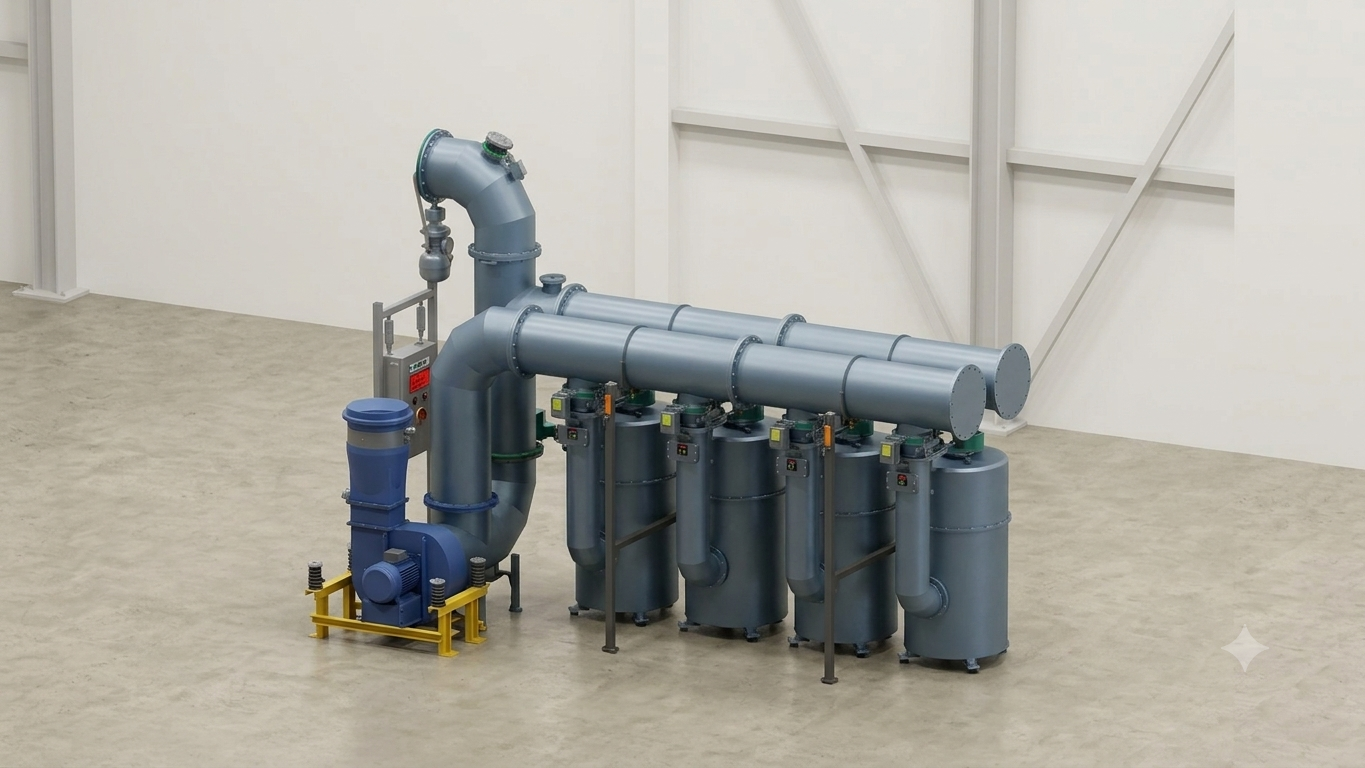
An ammunition depot orders personnel to shelter after an off-site chemical release. The underground bunker’s ventilation switches to protected mode and the NBC Filtration System becomes the primary life‑support. In that critical period, correct setup, filtration staging and operational discipline determine whether occupants remain safe and mission-ready.
NBC threats—radioactive particulates, biological aerosols and toxic chemical vapours—remain a core concern for military, industrial and critical infrastructure facilities. An NBC Filtration System installed in an underground bunker is the engineered barrier that removes these hazards while maintaining positive pressure and habitability. This guide describes a complete setup for bunker installations: design principles, component selection, operational controls and practical considerations for long‑term resilience.
Core principles of bunker NBC filtration
Underground bunkers rely on three core functions: particulate capture, gas‑phase adsorption and pressure management. Effective designs use multi‑stage filtration (prefilters, HEPA), deep or impregnated activated carbon beds for chemical removal, redundant blowers sized for pressure drop, and sealed housings with safe changeout procedures. Integration with environmental controls—humidity, temperature, CO2 management—and monitoring completes the life‑support chain.
System layout and air handling architecture
-
Dedicated protected-air handling unit: Centralise the NBC filtration modules in a dedicated AHU room with sealed access and containment provisions. Modular units simplify maintenance and staged upgrades.
-
Intake arrangement: Locate intakes with blast protection away from likely contamination sources or use remote intake points with extended inlet ducts and particle screens.
-
Multi-train architecture: Use at least two independent filter trains (A/B) with quick transfer dampers so one train can be serviced while the other remains online.
-
Positive pressure cascade: Design pressure differentials so critical zones (command room, medical bay) maintain higher pressure than support spaces, ensuring leakage outward.
Filtration stages and media
-
Prefiltration: G4–F9 media capture coarse dust and reduce loading on downstream HEPA and carbon stages.
-
HEPA filtration: H13/H14 modules provide validated removal of radioactive particulates and biological aerosols. Install with gaskets and integrity testing ports.
-
Activated/impregnated carbon beds: Select carbon type and impregnation matched to the threat spectrum. Bed depth and grain size are sized to ensure required residence time and breakthrough margin under expected concentrations and humidity.
-
Desiccant/dehumidification stage: Reduce moisture ahead of carbon to preserve adsorption capacity in humid environments common underground.
-
Final filtration and redundancy: Consider an additional HEPA downstream of carbon for any particulate breakthrough and to protect downstream spaces.
Blowers, ducts and pressure control
-
Blower sizing: Account for cumulative pressure drop across prefilters, HEPA, carbon and dampers. Use redundant blowers with automatic lead/lag switching and soft start to manage inrush currents.
-
Duct sealing: Specify airtight duct construction and gasketed access panels. Perform leakage testing to verify the pressure envelope.
-
Pressure control: Use differential pressure sensors and automatic damper logic to maintain positive pressure. Include manual override for emergency scenarios.
Monitoring, detection and control systems
-
Particle counters and HEPA DP sensors: Track filter loading and trigger planned changeouts.
-
Gas detectors: Install validated detectors downstream of carbon beds and within occupied spaces to detect breakthrough.
-
Control logic: Implement automated mode switching (normal → protected) with preprogrammed damper and blower sequences, alarm thresholds and remote status reporting.
-
Logging and diagnostics: Maintain time-stamped logs for DP trends, detector readings and actuator events to support maintenance decisions and post-event forensics.
Safe changeout and maintenance procedures
-
Containment: Provide negative-pressure filter-change booths or sealed housings that allow safe removal of contaminated media.
-
PPE and training: Define PPE levels, radiological/chemical handling protocols and training schedules for maintenance crews.
-
Spares and logistics: Maintain an on-site inventory of prefilters, HEPA cartridges and carbon modules sized for expected usage and worst-case scenarios.
-
Testing and requalification: Schedule periodic HEPA integrity tests, adsorbent breakthrough sampling and witnessed commissioning after any major maintenance.
Redundancy and reliability measures
-
Parallel trains and automatic switching minimize single-point failure risk.
-
Emergency power: Integrate UPS and generator capacity sized for blower startup currents and control systems to preserve filtration during outages.
-
Modular design: Enables hot-swapping of filter modules and incremental upgrades without full system shutdown.
Compliance and validation
-
Standards and testing: Design to applicable defence and civil standards for HEPA performance, adsorption testing and shelter pressurization. Require third‑party or witnessed tests and provide test reports with procurement.
-
Commissioning: Conduct witnessed commissioning with surrogate agent challenges where permitted, and verify blower performance, leakage rates and detector calibration.
Site-specific considerations
-
Environmental loads: Account for local dust, humidity and seasonal changes when specifying prefilter cadence and carbon conditioning.
-
Occupancy and endurance: Size airflow per person and plan for CO2 scrubbing or increased fresh-air cycling for long-duration sheltering.
-
Disposal pathways: Establish hazardous-waste handling and disposal contracts for contaminated filters and spent carbon.
Procurement and lifecycle factors
When comparing vendors or regional options—such as for Nbc air filtration system price in india—focus on verified performance, local service capability, spares availability and documented testing rather than unit price alone. Require technical datasheets showing HEPA ratings, carbon breakthrough curves and commissioning plans NBC filtration system price in india.
Common mistakes to avoid
-
Undersizing carbon beds or neglecting humidity impacts.
-
Relying on single-train systems without redundancy.
-
Using non-gasketed filter housings that allow bypass.
-
Omitting witnessed commissioning and periodic requalification.
Conclusion
A reliable NBC Filtration System for underground bunkers combines robust HEPA filtration, appropriately specified activated carbon adsorption, airtight construction, redundant blowers and integrated monitoring. Design for realistic threat profiles, ensure safe maintenance and validate performance through testing and commissioning. Prioritise engineering quality and lifecycle support to maintain occupant safety and operational continuity under NBC conditions.

 English
 Arabic
 French
 Spanish
 Portuguese
 Turkish
 Dutch
Dutch
 Italiano
 Russian
 Romaian
 Portuguese (Brazil)
 Greek
Greek