

Which Buildings Need Blast-Resistant Windows?
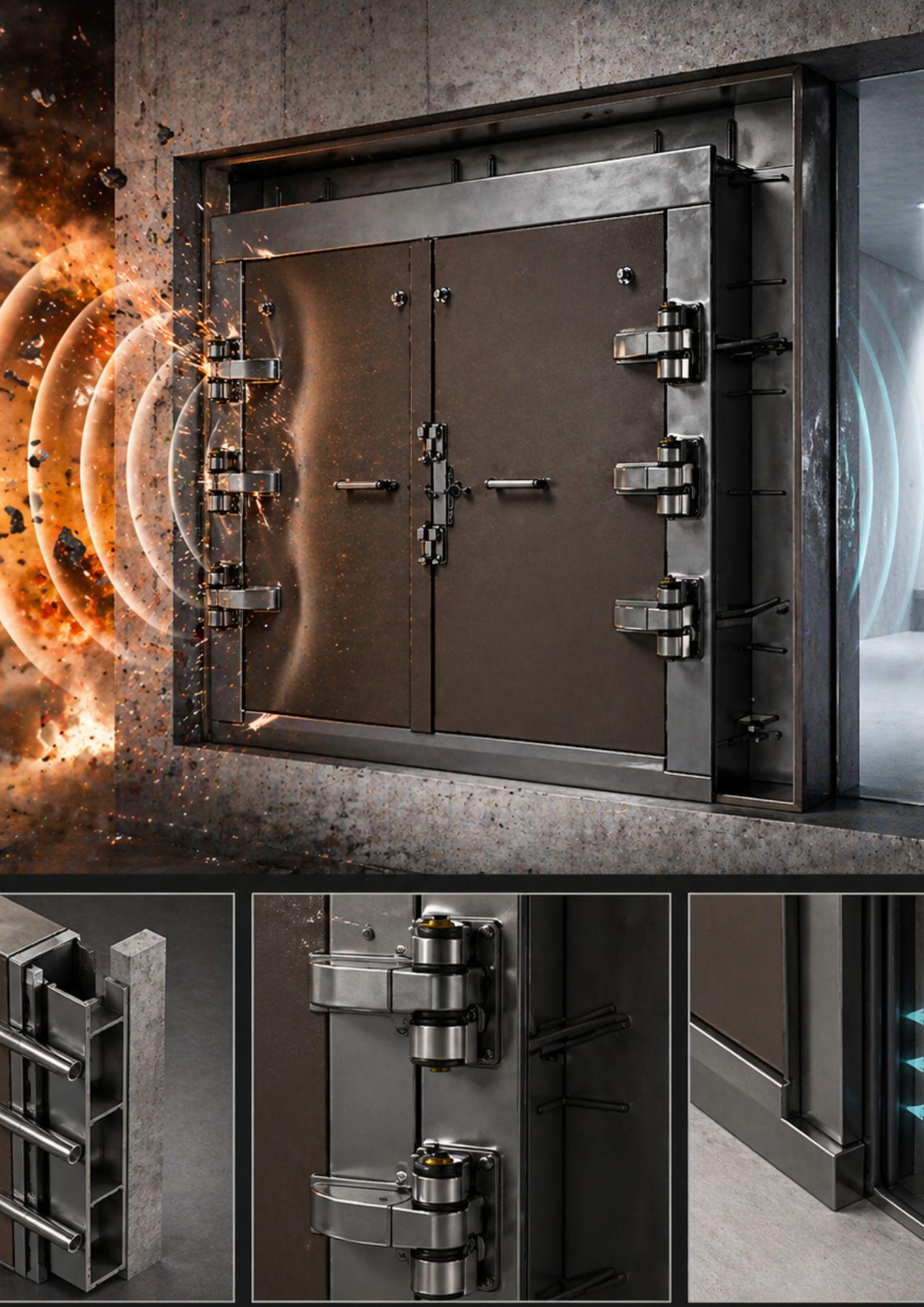
A midnight guard at a coastal power station notices unusual activity at a nearby industrial park. An unplanned explosion in an adjacent facility sends a pressure wave that shatters ordinary storefront glazing across the road—but the plant’s control room windows remain intact, retaining broken fragments and preventing interior damage. That scene shows why identifying which buildings need blast windows is a core responsibility for facility engineers, risk managers and infrastructure planners.
A blast window is an engineered glazing assembly that limits pressure transmission, retains fragments and preserves building continuity during explosive events. In modern industrial and security‑sensitive environments, selecting where blast windows belong is a function of threat assessment, occupant safety, asset criticality and continuity-of-operation priorities. Deciding which buildings need blast-resistant glass requires integrating blast window design with facility risk profiles rather than applying a one‑size‑fits‑all solution.
Why certain buildings require blast windows
Buildings that house critical operations, high‑value assets or concentrated personnel are primary candidates. Blast windows reduce secondary injuries from flying glass, protect sensitive equipment from overpressure, and help maintain operational continuity after an incident. Facilities with legal, contractual or national security roles—where downtime has outsized consequences—must factor blast glazing into their hardened envelope.
Key categories that need blast windows
-
Control rooms and SCADA hubs: These spaces contain the human-machine interfaces and servers whose loss can shut down operations.
-
Data centres and communications hubs: Protects continuity of services and avoids data loss from secondary damage.
-
Government buildings and courthouses: High-threat targets requiring protection for staff and public functions.
-
Military installations and defence buildings: Critical for personnel protection and mission continuity.
-
Ammunition depots and ordnance storage perimeters: To reduce fragmentation risk in nearby occupied structures.
-
Oil & gas and petrochemical control rooms: Prevents cascade failures in hazardous processing environments.
-
Power generation control centres and switchrooms: Maintain grid stability and safety systems.
-
Chemical processing control rooms: Protects operators and prevents release from damaged instrumentation.
-
Hospitals and emergency response centres: Facilitate post-incident care and coordination.
-
Industrial control rooms and critical infrastructure nodes: Essential to maintain production and safety.
-
High‑risk residential or mixed-use buildings near industrial sites: In selected cases, homeowners seek a Blast window for home for personal protection.
Technical rationale: how blast windows help
Blast windows work by combining laminated multi‑ply glazing, energy‑absorbing interlayers and engineered frame anchorage to reduce peak internal pressures and retain fragments. In buildings where occupant survival, equipment protection or continuity of operation is critical, the presence of blast-rated glazing materially reduces casualty risk and repair downtime compared with conventional glazing.
Design and structural considerations
Selection should follow a site-specific blast hazard assessment: define credible charge types, standoff distances and likely reflection surfaces. Blast window price then prescribes glazing thickness, interlayer type, frame geometry and anchorage to achieve required ratings. Structural reinforcement around openings, controlled-yield anchors and verified load paths are essential; glazing alone cannot compensate for poor frame or substrate performance.
Key features to require
-
Certified blast resistance ratings based on recognized test methods.
-
Laminated systems with proven fragment retention capability.
-
Robust frame designs with engineered anchorage and controlled-yield detailing.
-
Corrosion-resistant materials and durable sealants for site environment.
-
Weather-tight, thermally broken frames to maintain building performance.
-
Documented maintenance and inspection protocols to preserve long-term performance.
Applications and prioritization strategy
Prioritize buildings where failure would cause high human, economic or societal cost. A tiered approach often works:
-
Critical Tier: Control rooms, emergency facilities, data centres—install highest-rated blast windows.
-
Essential Tier: Administrative headquarters, telecom hubs, selected façades—install targeted protection based on exposure.
-
Protective Tier: Residential or lower-occupancy buildings near high-risk sites—consider Blast window for home options in specific zones.
Cost and investment drivers
Blast window price is influenced by required blast rating, glazing complexity, frame material, and installation complexity (including necessary structural reinforcement). Investment decisions should compare upfront costs against potential losses from downtime, injury, insurance impacts and regulatory penalties. In many high-risk facilities, blast-resistant glazing is a cost-effective resilience measure.
Buyer’s guide — selecting suppliers and products
-
Evaluate blast engineering competence and documented test results.
-
Require manufacturers to provide full assembly test certificates, not just glazing data.
-
Confirm manufacturing precision and available customization for unusual opening sizes.
-
Insist on installation support, third-party inspection and detailed technical documentation.
-
Consider local supply chains and service; consult recognised blast resistant window manufacturers and blast window manufacturers in India for regional expertise and faster maintenance response.
Common mistakes to avoid
-
Specifying blast windows without a site-specific hazard assessment.
-
Choosing products solely based on lowest price rather than certified performance.
-
Ignoring frame and substrate reinforcement needs—glazing without adequate anchors fails.
-
Overlooking maintenance requirements and inspection schedules.
-
Assuming all “blast proof windows” are equivalent; certification and assembly details matter.
Conclusion
Which buildings need blast‑resistant windows? Buildings where lives, essential services and high‑value assets must be preserved—control rooms, data centres, government and military facilities, petrochemical and power plant control areas—are the obvious candidates. Prioritize based on risk assessment, and specify complete assemblies that combine certified glazing, engineered frames and verified anchorage. Proper blast window design and procurement convert a product into durable protection and operational resilience. For residential or retrofit considerations, evaluate certified options like a Blast window for home only after aligning threat, exposure and lifecycle needs with manufacturer documentation and engineering oversight.
 Russian
 English
 Arabic
 French
 Spanish
 Portuguese
 Deutsch
 Turkish
 Dutch
Dutch
 Italiano
 Romaian
 Portuguese (Brazil)
 Greek
Greek