

How to Install a Forged Brass Ball Valve?
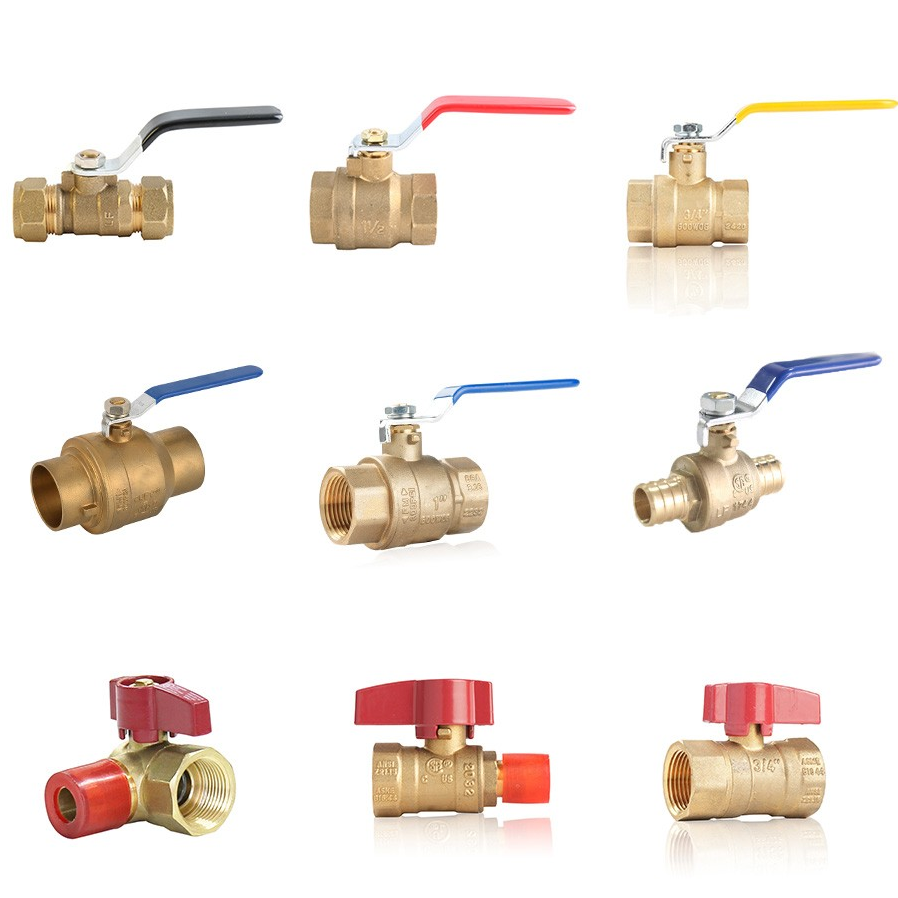
You’ve chosen a Brass Forged Ball Valve. Smart move. But installation shortcuts can ruin even the best component. This blog covers field-proven practices for mounting, torquing, and maintaining these valves. Follow these steps and enjoy decades of trouble-free service.
Installation Parameters:
Recommended thread sealant: PTFE tape (3–4 wraps) or pipe dope
Maximum installation torque on body hex: 50 Nm (1/2″), 80 Nm (3/4″)
Orientation: Any, but stem vertical preferred
Flow direction: Bidirectional (full port design)
Step-by-Step Installation:
Clean piping thoroughly. Debris like metal shavings or welding slag will scratch the ball surface. Even a 0.1 mm scratch increases leakage 10x.
Hand-tighten first. Then use a wrench on the valve body hex, not the bonnet. Applying torque to the bonnet can distort the stem seal. Recommended additional turns: 1/2 to 3/4 past hand-tight for NPT.
Do not overtighten. Forged brass is strong, but threads can still gall. Use anti-seize on stainless-to-brass connections. Torque to 40–50 Nm max for 1/2″.
Test after installation. Pressurize slowly. Open and close the valve fully 5 times. Check for stem weeping. If present, gently tighten the stem nut – typically 10 Nm only.
Maintenance Schedule:
Every 10.000 cycles: Lubricate stem via grease fitting if equipped. Use PTFE-based grease only.
Every 2 years (water service): Cycle valve fully 3 times to prevent seizure.
Every 5 years (gas service): Replace seats if leakage exceeds 10 ml/min at working pressure.
Never use: Petroleum-based grease on PTFE seats – it causes swelling.
Common Mistakes:
Using pipe wrench on chrome-plated forged valve: Marks the surface, enabling corrosion. Use smooth-jaw wrench.
Leaving valve partially open for months: Seats take a set. Then full closure leaks. Always fully open or fully close.
Ignoring handle stop pin: Forged valves have a stop pin at 0° and 90°. Forcing past damages internal stops.
Lifespan Data:
In hot water (60°C) with 3% dissolved solids, forged brass valves average 50.000 cycles before seat replacement. Cast valves fail around 15.000 cycles. Maintenance matters, but forging gives you a head start.

 English
 Arabic
 French
 Spanish
 Portuguese
 Deutsch
 Turkish
 Dutch
Dutch
 Italiano
 Russian
 Romaian
 Greek
Greek