

Speed Regulation Techniques in Induction Machines
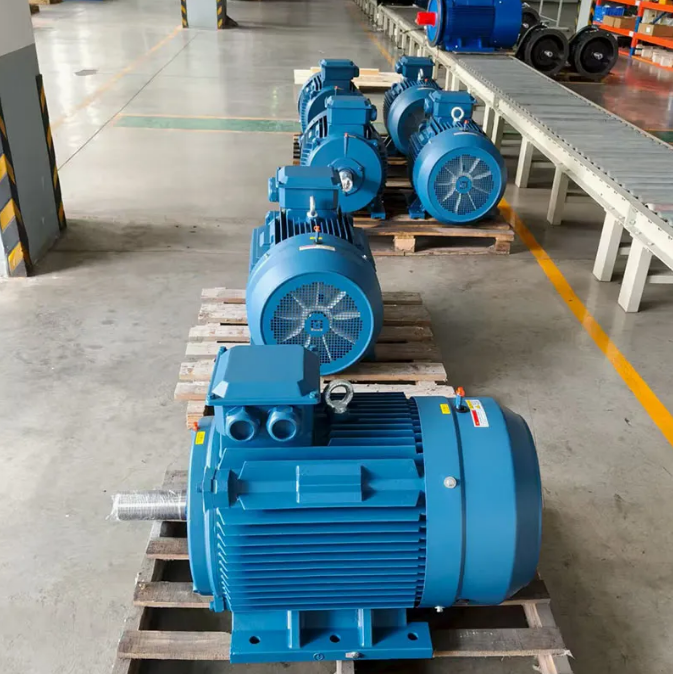
The integration of control systems has significantly improved the performance of Industrial Asynchronous Motors in automation environments. One of the most important developments is the use of Variable Frequency Drives (VFDs), which allow precise control of motor speed by adjusting supply frequency.
In a standard configuration, a 50Hz motor can be operated between 5Hz and 100Hz depending on design constraints. Voltage is adjusted proportionally to maintain a constant V/f ratio, preventing magnetic saturation or torque loss.
Vector control techniques enable decoupled control of torque and flux, improving dynamic response. This allows motors to maintain stable torque even at low speeds, which is essential in robotics, CNC machinery, and automated production lines.
Typical performance parameters under VFD control include:
Speed accuracy: ±0.5% to ±2%
Torque response time: 10–50 ms
Switching frequency: 2kHz–16kHz depending on inverter design
Thermal modeling becomes important under variable frequency operation, as cooling efficiency decreases at low speeds due to reduced fan performance. External cooling systems are often used for low-speed continuous operation.
Modern systems also integrate sensorless control methods using back EMF estimation, eliminating the need for mechanical speed sensors in many applications.
Industrial Asynchronous Motors combined with digital control systems provide flexible, energy-efficient solutions for modern manufacturing environments, enabling optimized performance across variable load conditions.
 Dutch
Dutch
 English
 Arabic
 French
 Spanish
 Portuguese
 Deutsch
 Turkish
 Italiano
 Russian
 Romaian
 Portuguese (Brazil)
 Greek
Greek