

Securing the Foundation of Modern Life: The Global OT Security Industry
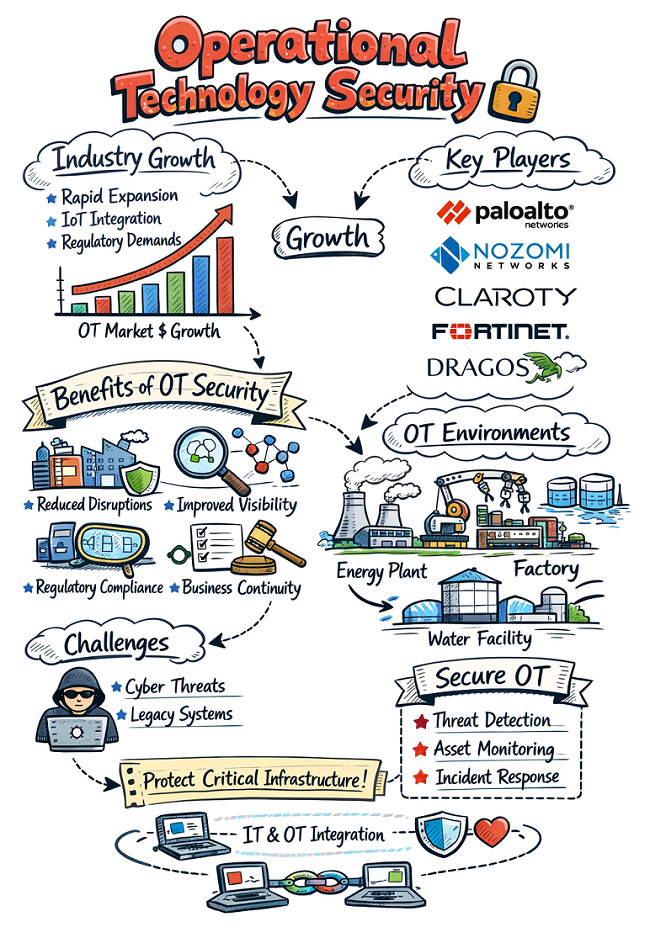
In the vast and often invisible world that powers our modern lives, a critical security revolution is underway. The systems controlling our electricity grids, water treatment plants, manufacturing floors, and transportation networks are all part of Operational Technology (OT), and protecting them has become a paramount concern. For decades, these industrial control systems were isolated, or "air-gapped," from the internet, but the drive for efficiency and data analytics has connected them, inadvertently exposing them to the full spectrum of digital threats. This has given rise to the dynamic and rapidly expanding Operational Technology Security industry, a specialized field dedicated to safeguarding the physical world from cyberattacks. Unlike traditional IT security, which prioritizes data confidentiality, OT security's primary mandate is ensuring safety, availability, and integrity. A data breach in IT is a financial and reputational problem; a breach in OT could lead to a power outage, an environmental disaster, or a catastrophic failure of critical infrastructure, making the stakes immeasurably higher and driving the need for a new breed of security tools, expertise, and corporate strategy.
The Operational Technology Security industry is comprised of a unique and diverse set of players, each approaching the problem from a different perspective. At the forefront are the pure-play OT security specialists like Dragos, Nozomi Networks, and Claroty. These companies were born out of the industrial world and have built their solutions from the ground up to understand the unique protocols (like Modbus and DNP3), legacy devices, and operational realities of OT environments. They are locked in a fierce innovation race to provide the best asset visibility and threat detection. Alongside them, the established IT security behemoths such as Palo Alto Networks, Fortinet, and Cisco are aggressively adapting their portfolios, leveraging their vast experience in network security to create dedicated OT solutions and capture a share of this burgeoning market. A third crucial group consists of the industrial automation giants themselves—Siemens, Schneider Electric, Honeywell, and Rockwell Automation. These companies are embedding security directly into their own hardware and software, recognizing that securing their products is now a core part of their value proposition, creating a complex and competitive ecosystem.
The core challenge that the OT security industry is built to address is the fundamental difference between IT and OT environments. IT networks are dynamic, with hardware and software refreshed every few years. OT networks are static and fragile, often containing equipment that is decades old and cannot be patched or taken offline without significant risk to physical operations. Traditional security methods like active scanning, which are common in IT, can crash sensitive OT devices. This has forced the industry to develop innovative, passive approaches to security. The most common technique is deep packet inspection of network traffic, where security sensors listen to communications to identify assets, map vulnerabilities, and detect anomalous behavior without ever interacting directly with the fragile endpoints. This "do no harm" principle is the guiding philosophy for every tool and strategy developed within the industry, requiring a deep understanding not just of cybersecurity, but of industrial engineering processes as well.
Ultimately, the OT security industry is not just about technology; it's about bridging a massive cultural and organizational gap. For years, the engineers running the factory floor (the OT team) and the IT department managing the corporate network operated in separate worlds with different priorities and vocabularies. High-profile attacks have forced these two teams into a necessary and often difficult collaboration. The industry's success, therefore, hinges on its ability to provide solutions that foster this collaboration. This means creating platforms that provide a common view of risk for both teams and training a new generation of professionals who are fluent in both the language of industrial control and cybersecurity. The industry is on a mission to build this bridge, ensuring that as our physical and digital worlds continue to merge, the foundational systems that sustain our society remain safe, reliable, and resilient against a new generation of threats.
Explore More Like This in Our Reports:
 Turkish
 English
 Arabic
 French
 Spanish
 Portuguese
 Deutsch
 Dutch
Dutch
 Italiano
 Russian
 Romaian
 Portuguese (Brazil)
 Greek
Greek