

Are Bluefire Valves the Answer to Your Gas Safety Concerns?
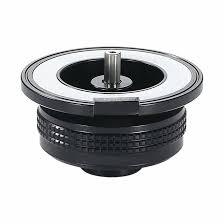
Spend enough time in the gas equipment industry and a pattern starts to emerge. Buyers scrutinize canister weight, coating finish, even the font on the label. The valve? It gets a glance, maybe a quick test thread, and then the conversation moves on. That is, until a return lands on your desk, or a field report comes in about a connection that did not hold. Suddenly the EN417 Valve is the only thing anyone wants to talk about. It is a small component. Threaded, compact, easy to overlook. But it sits at the exact point where pressurized gas meets the outside world, and that position carries consequences.
Pressure Does Not Tolerate Approximation
Think about what actually happens when someone attaches a burner to a gas canister. They thread the connection, maybe give it a half-turn to confirm it is seated, and then they turn the gas on. No hesitation. No second thought. The assumption built into that gesture is that the valve will hold, that the seal will do its job, that the tolerances are what they are supposed to be.
Gas under pressure is unforgiving in a way that few other materials are. A seal that has degraded slightly, a thread that runs just a fraction outside specification — these are not problems that announce themselves in advance. They show up later, in conditions the buyer never anticipated, far from the point of sale. Which is why the standard governing this valve exists in the first place: not as a bureaucratic exercise, but as a shared agreement that the interface between canister and appliance will behave predictably regardless of who made which part.
What Actually Separates a Good Supplier From a Risky One
This is where sourcing gets genuinely complicated, because a valve can clear the obvious checkboxes and still be trouble.
Take material composition. Brass is the common choice for the valve body, and for good reason — it holds its shape, resists corrosion, and machines cleanly to tight tolerances. But not all brass is equivalent. Suppliers under margin pressure sometimes work with alloys that behave acceptably on a test bench and then drift in performance after months of storage or exposure to temperature swings. Asking a supplier where their raw materials come from is not an unreasonable question. Neither is asking whether those materials are checked before they enter production.
Thread geometry is where things get precise in a way that cannot be faked for long. The connection between valve and appliance depends on dimensional accuracy that leaves very little room for variation. A valve that threads on easily and locks firmly is the result of controlled manufacturing and consistent measurement. One that feels slightly loose, or requires more force than expected, is telling you something. Pay attention to that.
Seals tend to be underestimated until they are not. The gasket or O-ring inside the valve is doing the actual containment work — and its performance depends on material choice, compression, and how well it holds up across a realistic range of temperatures. A supplier who cannot clearly describe their seal materials or explain how they test seal performance over time is a supplier who has not thought deeply enough about the product they are making.
Batch consistency, though — that is the conversation most buyers do not have early enough. A sample is a curated object. A production run is something else. The gap between the two is where quality control either functions or quietly does not. Rejection rates, mid-run testing, how non-conforming parts are handled: these details matter more than any specification sheet.
Documentation rounds it out. In regulated markets, traceability is no longer optional. Material records, inspection logs, production data — the ability to trace a finished valve back through its manufacturing history is both a compliance tool and a signal of how seriously a supplier takes what they make.
The Small Decision That Shapes Everything Downstream
Nobody buys a gas canister because of the valve. But a bad valve can undo everything else a product gets right. It is that kind of component — invisible when it works, impossible to ignore when it does not.
Sourcing teams that ask the harder questions early, before the order is placed, tend to build supply chains that hold up. Those that skip those conversations often find themselves revisiting the decision later, under pressure, with less leverage. For gas valves built to established safety standards and suited for professional sourcing, Bluefire is worth a closer look. Product specifications and sourcing details are available at https://www.bluefirecans.com/ .

 English
 French
 Spanish
 Portuguese
 Deutsch
 Turkish
 Dutch
Dutch
 Italiano
 Russian
 Romaian
 Portuguese (Brazil)
 Greek
Greek