

Path of Exile: The Passive Skill Tree as a Labyrinth of Choice
In the world of action RPGs, character progression is usually straightforward. You level up. You pick a skill from a small tree or a list of options. You move on. Path of Exile (POE 1), developed by Grinding Gear Games and released in 2013, rejected this simplicity entirely. Instead of a handful of choices, POE 1 offered players a labyrinth. The Passive Skill Tree contains over 1,300 nodes, interconnected in a web so dense that it looks less like a game menu and more like a map of neural connections. This single feature has become the defining symbol of Path of Exile, representing both its intimidating barrier to entry and its unmatched depth. The keyword Tree is the heart of everything.
The Passive Skill Tree is not a tree in the traditional sense. It is a massive constellation that every character class shares. A Marauder starts in the bottom-left quadrant, surrounded by nodes offering life, armor, and melee physical damage. A Witch starts at the top, near nodes for energy shield, mana, and spell damage. A Ranger begins on the right, close to nodes for evasion, attack speed, and projectile damage. A Templar starts between the Marauder and Witch. A Shadow starts between the Witch and Ranger. A Duelist starts between the Marauder and Ranger. Despite these different starting locations, any class can travel across the entire Tree. The only limitations are the attributes needed to reach certain nodes and the opportunity cost of spending points to travel. A Witch can path down to grab two-handed weapon damage. A Marauder can climb up to become a critical strike spellcaster. A Ranger can wander into the bottom-left to build a tanky melee character. This freedom is exhilarating. The Tree does not tell you what to play. It asks what you want to build.
Navigating the Tree requires planning, research, and often external tools like Path of Building. Minor nodes, the small circles that fill most of the Tree, grant modest bonuses such as +10 to strength, +5% to cold resistance, or +4% to maximum life. These nodes are the pathfinding fodder that connects the more important nodes. Notable nodes are larger and more visually distinct. A notable might grant +40% to physical damage with axes, +1 to maximum elemental resistances, or +20% to projectile speed. Keystone nodes are the largest and rarest. Each keystone fundamentally changes how your character operates. Chaos Inoculation sets your maximum life to 1 but makes you immune to chaos damage, allowing you to focus entirely on energy shield. Mind over Matter causes 30% of damage to drain your mana before your life. Elemental Equilibrium makes your elemental damage reduce enemy resistance to other elements but increase resistance to the element you used. Ancestral Bond allows you to summon two totems but prevents you from dealing damage yourself. A single keystone can define an entire build. Choosing the right path through the Tree to reach your desired keystones and notable nodes while efficiently collecting useful minor nodes is a puzzle with thousands of possible solutions.
The second keyword that defines Path of Exile is Currency. The Tree determines your build’s potential, but Currency determines your gear. Path of Exile has no gold. Instead, it uses a barter system of orbs that also serve as crafting tools. An Orb of Alchemy upgrades a normal item to a rare item. A Chaos Orb rerolls the modifiers on a rare item. An Exalted Orb adds a new modifier to a rare item. A Divine Orb rerolls the numeric values of modifiers. The rarest currency, a Mirror of Kalandra, duplicates any non-unique item. Every currency item has a gameplay function, so no drop is ever worthless. The economy is entirely player-driven and famously deep.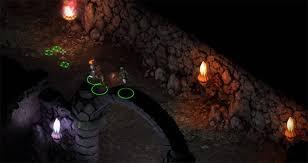
Path of Exile is not a game for casual players. The learning curve is brutal. The Tree alone has driven away countless new players. But for those who climb that curve, Path of Exile 3.28 Currency offers an experience unmatched in the genre. The Passive Skill Tree is a labyrinth, but navigating it is a joy. More than a decade after release, it remains the gold standard for character customization. No other action RPG has come close.
 Russian
 English
 Arabic
 French
 Spanish
 Portuguese
 Deutsch
 Turkish
 Dutch
Dutch
 Italiano
 Romaian
 Portuguese (Brazil)
 Greek
Greek