

Does Ivermectin Kill Tapeworms? Ivermectin for Deworming: Separating Tapeworm Myths From Facts (US Guide)
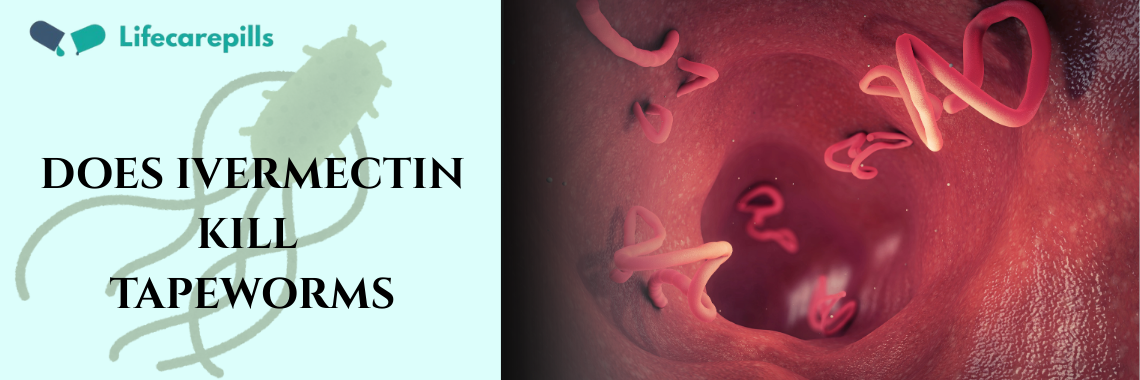
If you’re searching does ivermectin kill tapeworms, you’re asking one of the most common deworming questions online. The medically accurate answer is no—ivermectin is not considered a reliable first-line treatment for human tapeworm infections, even though it is highly effective for several roundworms and external parasites. This article is mainly targeted in the US, where people often search by medicine name before using telehealth, urgent care, or speaking with a primary doctor. Current US clinical guidance shows that praziquantel is preferred for tapeworms, while ivermectin works best for Strongyloides, certain soil-transmitted roundworms, and some skin parasites.
So the short answer stays simple:
does ivermectin kill tapeworms? → usually no.
Why the Tapeworm Myth Exists
The myth starts with one simple misunderstanding:
People think every “dewormer” works for every worm.
That is not how parasite medicine works.
Many people assume ivermectin treats:
- Tapeworms
- Roundworms
- Hookworms
- Pinworms
- Any stomach parasite
But in medicine, parasites are divided into different biological families, and each family responds to different drugs.
This is why the “one tablet cures every worm” myth continues.
Myth #1: Ivermectin Kills All Worms
This is the biggest myth.
Ivermectin is powerful, but it does not kill all worm species.
Parasites That Respond Best
Ivermectin is excellent for:
- Strongyloides stercoralis
- Some roundworms
- Certain whipworm combinations
- Onchocerciasis microfilariae
- Scabies mites
- Head lice
Parasites That Do Not Respond Reliably
Ivermectin is usually not effective enough for:
- Beef tapeworm
- Pork tapeworm
- Fish tapeworm
- Dwarf tapeworm
- Many flukes
- Some protozoa
So yes, it’s a real dewormer—but not a universal one.
Fact #1: Ivermectin Works Best for Roundworms
The science is clear: ivermectin’s strongest role in human deworming is nematodes (roundworms).
One of the best examples is Strongyloides, where CDC lists ivermectin as the first-line treatment, often given as 200 mcg/kg orally for 1–2 days.
This is why ivermectin has such a strong reputation.
It is highly effective for:
- Soil exposure parasites
- Travel-related nematodes
- Chronic intestinal roundworms
- Hyperinfection syndromes
This success with roundworms is exactly why many people mistakenly believe it should work for tapeworms too.
Myth #2: Tapeworms Are Just Another Roundworm
This is medically false.
Tapeworms are cestodes (flatworms).
Roundworms are nematodes.
That difference matters because the drug mechanism is different.
How Ivermectin Works
Ivermectin targets glutamate-gated chloride channels, which are highly active in:
- Roundworms
- Arthropods
- Mites
This causes paralysis and death.
Why Tapeworms Don’t Respond the Same
Tapeworms have very different neuromuscular biology.
That means safe human doses of ivermectin do not reliably:
- Kill adult tapeworms
- Remove the scolex
- Stop segment shedding
- Clear intestinal taeniasis
This is the key fact that separates myth from reality.
Fact #2: Praziquantel Is the Real Tapeworm Medicine
This article is mainly targeted in the US, so CDC guidance matters most.
For active human taeniasis, praziquantel is the preferred medication.
Why Praziquantel Works Better
It:
- Damages the tapeworm’s surface
- Causes strong contraction
- Helps it detach from the intestine
- Often works in one single dose
This is why it remains the first-line US tapeworm treatment, while ivermectin is not.
Myth #3: Seeing Worm Segments Means Any Dewormer Will Work
A lot of people panic when they notice:
- White rice-like pieces in stool
- Anal itching
- Mild cramps
- Bloating
- Weight loss
Those white segments are often proglottids, a strong sign of tapeworm infection.
This symptom commonly triggers searches like:
“does ivermectin kill tapeworms?”
But visible segments usually point toward a praziquantel-type treatment need, not just any dewormer.
Fact #3: Ivermectin Is Excellent for External Parasites Too
One fact people often miss is that ivermectin’s deworming role extends beyond the gut.
It is also highly effective for:
Scabies
A common human mite infestation.
Head Lice
Especially resistant cases.
Rosacea-Related Mites
Topical forms are widely used in the US.
So while it’s not a tapeworm medicine, it remains one of the most useful antiparasitic drugs overall.
Why This Topic Is Mainly Targeted in the US
This guide is mainly targeted in the US, where medication-name searches are extremely common.
Typical reasons include:
- Telehealth deworming requests
- Searching before urgent care
- Recent international travel
- Soil exposure
- Visible stool segments
- Raw pork or beef concerns
- Trying to avoid clinic costs
For US readers, the biggest takeaway is:
ivermectin is a great dewormer when the parasite is a nematode or mite—not a tapeworm.
Risks of Believing the Myth
Using ivermectin for the wrong parasite may lead to:
- Persistent infection
- Continued egg shedding
- Ongoing stool segments
- Delayed diagnosis
- Delayed praziquantel treatment
- Missed Taenia solium complications like cysticercosis
That’s why species-specific treatment matters more than choosing a famous medicine name.
Prevention Tips: Facts Over Myths
The best deworming strategy is prevention.
Helpful US-focused tips include:
- Cook pork and beef thoroughly
- Avoid raw freshwater fish
- Wear shoes outdoors
- Wash hands after toilet use
- Avoid contaminated soil
- Use safe sanitation
- Treat household scabies contacts
These steps reduce both roundworm and tapeworm risk.
The Bottom Line
So, when it comes to ivermectin for deworming and separating tapeworm myths from facts, the truth is clear:
Facts
- Excellent for Strongyloides
- Great for some roundworms
- Strong for scabies and lice
- Useful for microfilariae
Myths
- It does not kill all worms
- It is not reliable for tapeworms
- Tapeworms usually need praziquantel
- Albendazole may be used in selected cases
So the answer to does ivermectin kill tapeworms remains no, while the real fact is that its best deworming role is with roundworms and external parasites.
FAQs
1) Does ivermectin kill tapeworms?
No. It is not considered a reliable first-line treatment for human tapeworm infections.
2) What parasites respond best to ivermectin?
It works best for Strongyloides, certain roundworms, microfilariae, scabies, and lice.
3) What medicine is better for tapeworms?
Usually praziquantel, which CDC lists as the preferred US treatment.
4) Why does the myth continue?
Because many people assume all worms are biologically the same and every dewormer works for every worm.
5) Is this article mainly targeted in the US?
Yes, this content is mainly targeted in the US, where parasite medication searches are very common.
 Italiano
 English
 Arabic
 French
 Spanish
 Portuguese
 Deutsch
 Turkish
 Dutch
Dutch
 Russian
 Romaian
 Portuguese (Brazil)
 Greek
Greek