

Are Aerosol Cans a Practical Format for Food Industry Use?
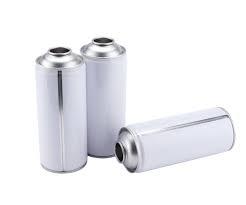
Food packaging does not often invite curiosity. It sits on shelves, it does its job, it gets thrown away — or hopefully recycled — and most people never think twice about how it was made or why it was made that way. But packaging decisions carry real consequences, particularly in food manufacturing, and the Two-Piece Aerosol Can is one of those decisions that repays closer attention.
The name describes the construction. Two pieces: a body and an end, drawn and formed from a single sheet of metal rather than assembled from multiple separate components. No side seam running the length of the can. No joined base. The result is a container with fewer weak points, a cleaner internal surface, and a structural integrity that comes from the material itself rather than from the quality of its joins. For food applications, that internal surface matters considerably — anything that contacts food directly needs to be smooth, consistent, and free from the kind of irregularities that joined seams can introduce.
Where does this show up in practice? Whipped cream is probably the application most people have encountered without realizing it. The pressurized delivery system that turns liquid cream into something that holds its shape when dispensed depends on a container that maintains consistent internal pressure without any variation caused by seam weakness or coating inconsistency. Cooking sprays work on the same principle — a fine, even mist of oil that coats a surface without pooling or spattering requires a valve and container combination that performs reliably under pressure, every time, not just most of the time.
Beyond those familiar examples, aerosol technology in food reaches further than casual observation suggests. Flavor sprays used in commercial food production, dispensing systems for sauces and dressings in food service environments, preservation sprays applied during processing — these are all applications where the container is doing active work, not just holding something inert. In each case, consistency of output matters because inconsistency in a food production context translates directly to product variability, which is something manufacturers work hard to avoid.
The hygiene argument for two-piece construction in food contexts is straightforward but worth stating. A seamed can has joins where coating can be uneven, where microscopic gaps can exist, where cleaning during production is harder to verify. A drawn body with no seam removes those variables. The internal surface behaves predictably, coating adhesion is uniform, and the risk of contamination from imperfect joins is eliminated rather than managed. For food contact applications, eliminating a risk is always preferable to controlling it.
Recyclability adds another layer to the appeal. Food manufacturers operating under sustainability commitments — and increasingly, most of them are — have reason to prefer packaging that moves through recycling infrastructure cleanly. A two-piece metal container, with fewer mixed components and no seam adhesive, processes more straightforwardly than alternatives with more complex construction. The environmental conversation around food packaging is not going away, and container choice is one of the more tangible levers available to manufacturers who want their packaging decisions to reflect that reality.
Consumer familiarity with aerosol food products has grown steadily, partly because the format genuinely works well for certain applications and partly because the products that use it tend to perform consistently. A whipped topping that behaves the same way on the hundredth use as the first, a cooking spray that covers evenly without waste — these experiences build the kind of quiet confidence that keeps a product on a shopping list without the consumer ever consciously analyzing why. Those interested in aerosol can construction suited to food and commercial applications can view the Bluefire range at https://www.bluefirecans.com/product/ .
 Italiano
 English
 Arabic
 French
 Spanish
 Portuguese
 Deutsch
 Turkish
 Dutch
Dutch
 Russian
 Romaian
 Portuguese (Brazil)
 Greek
Greek