

Mastering Resistance Spot Welding: Principles, Applications, and Best Practices
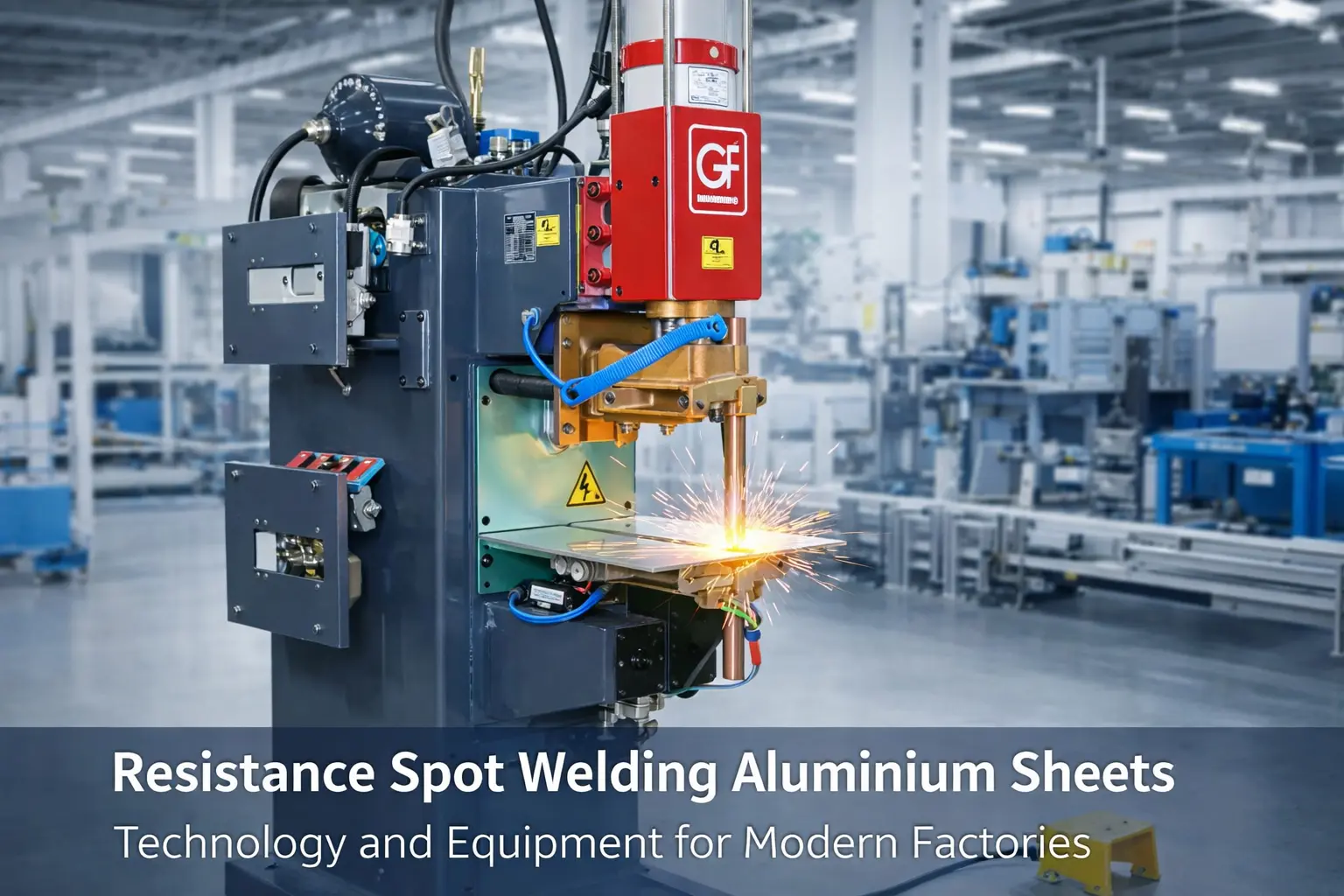
In modern manufacturing, resistance spot welding (RSW) remains one of the most efficient and reliable methods for joining sheet metals. From automotive assembly lines to industrial fabrication, RSW enables rapid, high-strength welds without the need for filler materials. For engineers, OEMs, and automation integrators, understanding the principles, applications, and best practices of resistance spot welding is key to optimizing production, reducing costs, and achieving consistent quality.
At Heron Welder, we specialize in delivering advanced resistance welding solutions, including spot, projection, seam, MFDC, and capacitor discharge welding machines, complemented by precision welding guns, controllers, and fully automated production lines tailored to your manufacturing needs.
What is Resistance Spot Welding?
Resistance spot welding is a fusion-based welding process that joins two or more metal sheets by applying pressure and passing a controlled electric current through the contact area. The electrical resistance at the interface generates heat, which melts the metal locally, forming a strong weld nugget as it cools under pressure.
Key elements of RSW include:
- Electrodes: Copper alloy electrodes transmit current and apply pressure. Their shape and cooling system are critical for consistent weld quality.
- Current and Time: The magnitude of the current and its duration directly affect weld penetration and nugget size.
- Force: Sufficient pressure ensures intimate contact between the metal sheets, reducing voids and porosity.
RSW is particularly suited for thin to medium gauge sheet metals, including steel, stainless steel, and aluminum alloys, making it indispensable in industries like automotive, aerospace, and appliance manufacturing.
How Resistance Spot Welding Works
The RSW process is deceptively simple but highly precise:
- Sheet Placement: Two metal sheets are positioned between electrodes.
- Electrode Force Application: The electrodes clamp the sheets together to ensure electrical contact.
- Current Pulse: A high-amperage electric current passes through the electrodes, generating heat at the interface due to electrical resistance.
- Weld Nugget Formation: The localized melting forms a weld nugget.
- Cooling Under Pressure: Maintaining electrode force during cooling ensures a strong metallurgical bond.
This controlled process produces repeatable welds in seconds, which is why resistance spot welding is preferred in high-volume production lines.
Applications of Resistance Spot Welding
RSW is widely used in manufacturing where speed, precision, and repeatability are crucial. Key applications include:
- Automotive Manufacturing: Body panels, chassis assemblies, and door frames.
- Appliance Fabrication: Washing machines, refrigerators, and HVAC casings.
- Metal Furniture: Steel seating frames, cabinets, and shelving.
- Electrical Enclosures: Cabinets and control panels requiring high structural integrity.
With automation, spot welding can be integrated into robotic assembly cells, enabling high throughput, consistent quality, and minimal operator intervention.
Resistance Spot Welding vs. Other Welding Methods
Comparing RSW to other welding methods highlights its advantages:
| Welding Method | Advantages | Limitations |
|---|---|---|
| Resistance Spot Welding | Fast, energy-efficient, no filler required, suitable for thin sheets, easily automated | Limited to sheet thickness, electrode wear over time |
| MIG Welding | Can weld thicker materials, versatile | Slower, requires filler wire, more post-processing |
| TIG Welding | High precision, clean welds | Slower, requires skilled operators, less suitable for high-volume production |
| Laser Welding | Precise, minimal distortion | High cost, requires specialized safety measures |
For high-volume sheet metal production, RSW remains the optimal balance of speed, cost-efficiency, and strength.
Best Practices for Resistance Spot Welding
To achieve optimal results, consider these best practices:
- Electrode Maintenance: Regularly dress and clean electrodes to prevent wear and ensure consistent weld quality.
- Process Control: Monitor current, force, and weld time using advanced controllers to maintain repeatability.
- Material Preparation: Remove coatings, oils, or oxides from sheets to reduce electrical resistance variability.
- Cooling Systems: Ensure proper water cooling for electrodes to prevent overheating and premature wear.
- Automation Integration: Use robotic arms or CNC-controlled systems for precise electrode positioning and cycle times.
Heron’s resistance spot welding machines are designed with smart controls, precise force regulation, and robust cooling systems, making it easier for manufacturers to adhere to these best practices.
Why Choose Heron for Resistance Spot Welding Solutions?
As a global leader in industrial welding equipment, Heron provides:
- Advanced RSW Machines: From standard spot welders to high-speed automated solutions.
- Comprehensive Support: Expert guidance for machine setup, process optimization, and maintenance.
- Integrated Automation: Complete robotic or semi-automated production lines.
- Customization: Machines tailored to your specific material, thickness, and production volume requirements.
Partnering with Heron ensures consistent weld quality, reduced downtime, and optimized production efficiency.
FAQs About Resistance Spot Welding
Q1: What materials can be resistance spot welded?
A: Most ferrous and non-ferrous metals like steel, stainless steel, and aluminum alloys can be welded, provided the sheets are within the recommended thickness range.
Q2: How does electrode shape affect weld quality?
A: Electrode tip geometry determines current density and weld nugget size. Proper electrode design minimizes spatter and improves repeatability.
Q3: Can resistance spot welding be automated?
A: Yes, RSW is highly compatible with robotic integration, offering consistent welds, higher throughput, and reduced operator intervention.
Q4: How often should electrodes be replaced?
A: Electrode life depends on material, current, and production volume. Routine inspection and dressing extend lifespan.
Q5: Is resistance spot welding energy-efficient?
A: Yes, RSW consumes less energy than other fusion welding methods because it targets heat only at the weld interface.
Conclusion: Optimize Your Production with Heron
Resistance spot welding is a cornerstone of efficient sheet metal joining. By understanding the principles, applications, and best practices, manufacturers can improve quality, speed, and cost-effectiveness.
Heron Welder combines expertise, innovative equipment, and automation solutions to meet the needs of OEMs, industrial engineers, and production managers worldwide.
Ready to enhance your production line? Contact Heron today to request a quote or consult on customized resistance spot welding and automation solutions tailored to your factory’s requirements.
 Italiano
 English
 Arabic
 French
 Spanish
 Portuguese
 Deutsch
 Turkish
 Dutch
Dutch
 Russian
 Romaian
 Portuguese (Brazil)
 Greek
Greek