

What Makes Bluefire Aerosol Valves Perform Differently?
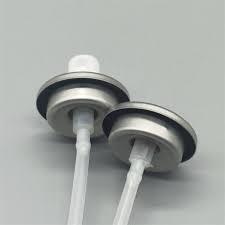
Most people press the nozzle and move on. What happens inside the can in that fraction of a second — how the product breaks apart, how finely it disperses, how evenly it lands — rarely enters the picture. But the Bluefire Aerosol Can Valve sitting between the contents and the outside world is doing considerably more work than its size suggests, and the difference between valve types shapes the entire experience of using a spray product.
Standard valves operate on a straightforward principle. Press down, open a passage, let pressurized product through. The spray that comes out depends heavily on the propellant doing the work — the gas pushes the liquid out, and atomization happens as that mixture hits open air. It functions. For a wide range of products, it functions well enough that nobody questions it. But well enough and genuinely well are not the same thing, and the gap between them becomes visible when you need consistent, fine, controlled output rather than just output.
Mechanical break-up valves approach the problem differently. Rather than relying solely on propellant pressure to create a usable spray, the valve itself contains internal geometry — channels, swirl chambers, shaped passages — that actively works on the product as it travels through. The liquid is spun, redirected, broken into smaller droplets before it even exits the nozzle. The result is a spray pattern that is more consistent, finer in particle size, and less dependent on the propellant doing all the heavy lifting. The can could be running lower on pressure and the output would still be more controlled than a standard valve at full pressure.
Why does particle size matter? In practical terms, it determines coverage. A finer spray reaches further into surfaces, coats more evenly, wastes less product through overspray or dripping. In applications like insecticides, lubricants, or personal care products, that difference is tangible — you use less to achieve the same result, which means the can lasts longer and the application is cleaner. In industrial or technical contexts, the consistency of droplet size can affect whether a product actually works as intended or just approximates the desired outcome.
The internal geometry of mechanical break-up designs also tends to make spray angle more predictable. Standard valves can produce patterns that shift depending on how the can is held, how full it is, or how warm the product is. A valve that mechanically shapes the spray is less sensitive to those variables because the physical structure, not just the pressure, is determining what the output looks like. That reliability is not visible in a product description but becomes obvious after enough use.
There is a cost consideration that shapes where each type gets used. Mechanical break-up valves involve more engineering, more precise manufacturing, and more quality control. That adds expense at the production stage, which means they tend to appear in products where spray quality directly affects performance or consumer satisfaction. Standard valves remain the practical choice for applications where the distinction does not meaningfully change outcomes — general purpose sprays, simple surface coatings, products where broad coverage matters more than precision.
Choosing between them, then, is not about one being categorically better. It is about matching the valve to what the product actually needs to do. A cleaning spray and a medical aerosol have different requirements. An Aerosol Can Valve that works well for one may not serve the other at all. Those wanting aerosol products built with this level of attention to spray performance can see what Bluefire offers at https://www.bluefirecans.com/product/ .
 French
 English
 Arabic
 Spanish
 Portuguese
 Deutsch
 Turkish
 Dutch
Dutch
 Italiano
 Russian
 Romaian
 Portuguese (Brazil)
 Greek
Greek