

The Legal Frontier: Voice Stress Analysis Admissibility in Modern Courts
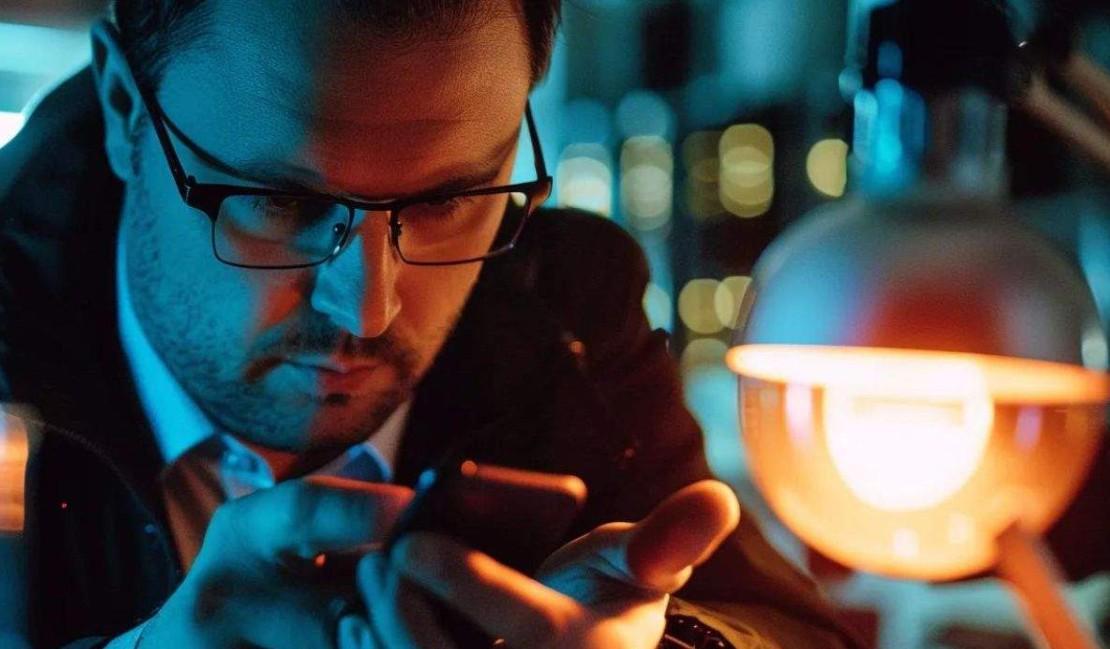
The evolution of forensic technology has always been a double-edged sword for the legal system. From the early days of polygraphs to the modern era of DNA sequencing, courts have struggled to balance investigative innovation with the rigorous standards of evidentiary reliability. One of the most contentious tools currently navigating this legal labyrinth is Voice Stress Analysis (VSA). Often marketed as a more portable and less invasive alternative to the traditional lie detector, VSA measures involuntary frequency modulations in the human voice—specifically the "micro-tremors" that supposedly fluctuate when a person is under the stress of deception. As law enforcement agencies increasingly adopt this technology, the debate surrounding its admissibility in courtrooms has intensified, forcing judges to weigh the "Daubert" and "Frye" standards against a backdrop of conflicting scientific data and investigative necessity.
The Scientific Debate and Judicial Skepticism
At the heart of the VSA admissibility crisis is a fundamental disagreement between manufacturers and the broader scientific community. Proponents of Computer Voice Stress Analyzers (CVSA) argue that the technology is nearly infallible, claiming accuracy rates that rival or exceed the polygraph. They suggest that the physiological response of the laryngeal muscles provides a direct window into the speaker's veracity. However, many independent peer-reviewed studies have failed to replicate these claims, often finding that the stress detected by the software does not necessarily correlate with intentional deception. This lack of scientific consensus is the primary reason why many high-level courts remain hesitant to allow VSA results as direct evidence.
In the United States, the admissibility of such evidence often hinges on the Daubert Standard, which requires that a technique be tested, peer-reviewed, and have a known error rate. Because VSA results can be influenced by external factors—such as background noise, the physical health of the subject, or general anxiety unrelated to lying—many judges rule that the technology does not yet meet the threshold of scientific certainty. For students in a private investigator course, learning how to interpret these scientific critiques is vital. A professional must know not just how to use a tool, but where its legal limitations lie, ensuring that any evidence gathered is robust enough to survive a cross-examination by a savvy defense attorney.
VSA as an Investigative Tool vs. Evidence
Despite the hurdles to its admissibility in a trial setting, Voice Stress Analysis has found a permanent home in the investigative phase of the legal process. Law enforcement agencies and private firms frequently use VSA as a "truth-verification" aid to narrow down suspect lists or to encourage confessions during pre-trial interviews. In this context, the technology is not being used to prove guilt to a jury, but rather to guide the direction of an inquiry. Courts generally allow this use because it falls under the umbrella of investigative discretion, provided that the rights of the individual are not violated during the process. The psychological impact of being told a "machine" has detected a lie often leads to breakthroughs that traditional questioning might miss.
However, the transition from an investigative lead to a piece of courtroom evidence is where the legal friction occurs. If a confession is obtained primarily because a suspect was told a VSA test "proved" they were lying, defense teams may argue that the confession was coerced or based on "junk science." This makes the training found in a private investigator course invaluable. Investigators must learn how to use these tools ethically and strategically, ensuring that the primary evidence (such as a confession or physical proof) remains untainted by the controversial nature of the technology used to find it. The goal is always to use technology as a bridge to facts, rather than as a replacement for them.
Comparative Legal Perspectives Across Jurisdictions
The admissibility of VSA is not a monolithic issue; it varies wildly depending on the country and even the specific state or province. In some jurisdictions, the results of a VSA test are strictly prohibited from being mentioned in front of a jury to prevent "unfair prejudice," as jurors might give the mechanical output more weight than it deserves. In other regions, VSA may be admitted if both the prosecution and the defense agree to its inclusion—a process known as a stipulation. This legal patchwork creates a complex environment for forensic experts who must adapt their testimony based on the specific rules of the court they are entering.
Interestingly, as the software behind VSA improves through artificial intelligence and machine learning, some legal scholars predict a shift in its acceptance. If newer algorithms can demonstrate a consistent ability to filter out "innocent" stress from "deceptive" stress, the foundational arguments against its admissibility may begin to crumble. Staying ahead of these shifts is a core component of professional development.
The Future of Voice Analysis in the Legal System
Looking forward, the debate over Voice Stress Analysis will likely merge with broader discussions regarding biometric data and AI ethics. As we move toward a future where "voiceprinting" and emotional AI become standard features of digital communication, the courts will be forced to establish clearer guidelines on what constitutes a reliable vocal analysis. We may see a move toward "Hybrid Evidence," where VSA is used in conjunction with other biometric markers to create a more holistic profile of a witness's credibility. This would mitigate the weaknesses of using voice analysis in isolation and potentially provide the scientific "heft" that current judges find lacking.
 English
 Arabic
 French
 Spanish
 Portuguese
 Deutsch
 Turkish
 Dutch
Dutch
 Italiano
 Russian
 Romaian
 Portuguese (Brazil)
 Greek
Greek