

Nut Welder: Precision Welding Solutions for Modern Manufacturing
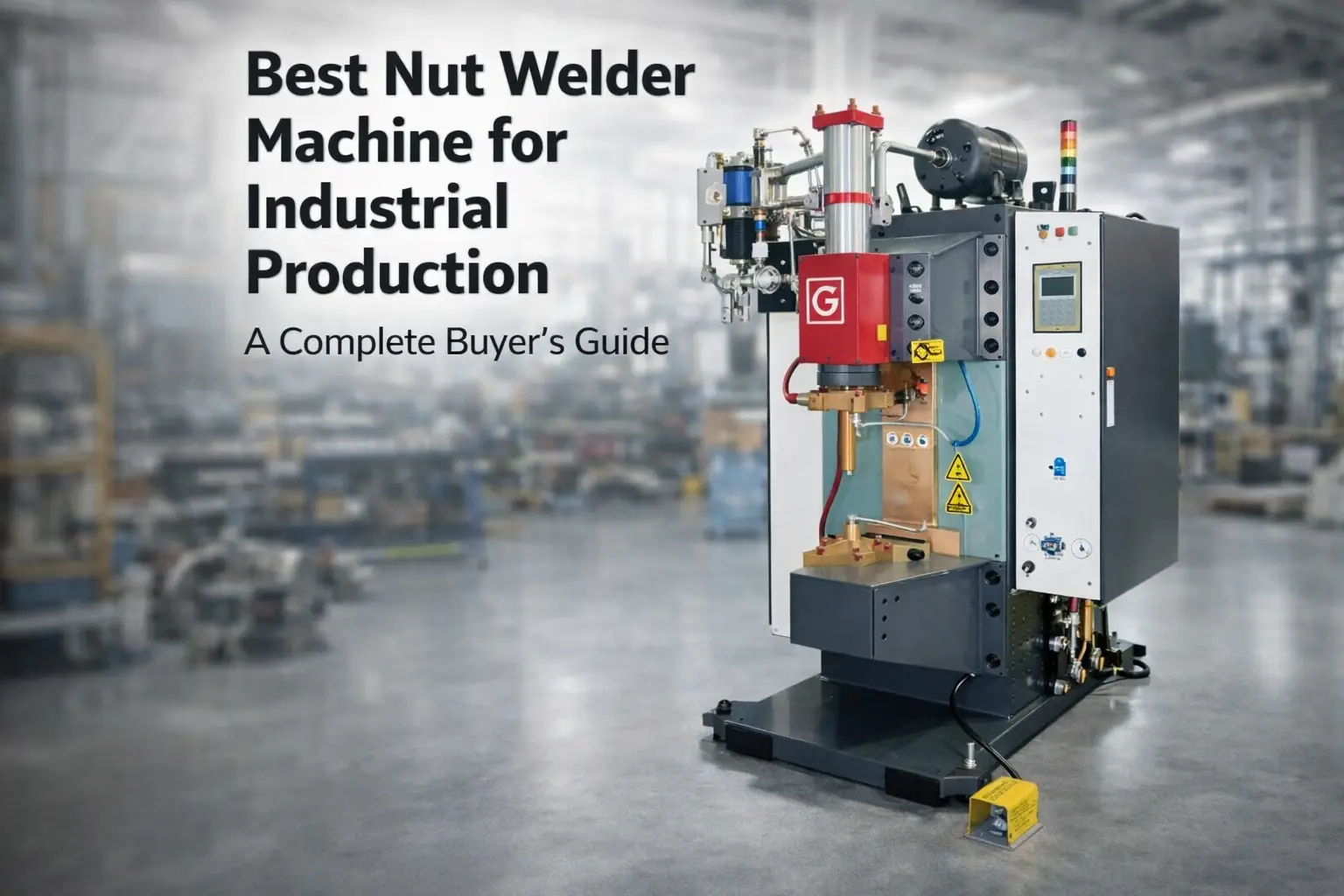
In today’s competitive manufacturing landscape, efficiency, precision, and reliability are essential. For OEMs, factory automation integrators, and production engineers, investing in the right welding technology can significantly impact productivity and product quality. One such specialized solution is the nut welder, a machine designed to securely attach nuts onto metal components with speed and accuracy. Heron Welder, a global leader in industrial welding and metal-joining equipment, provides advanced nut welding solutions tailored for high-volume and automated production environments.
What Is a Nut Welder?
A nut welder is a type of resistance welding machine specifically designed to attach nuts to metal sheets or components. Unlike traditional fastening methods, nut welding creates a metallurgical bond between the nut and the base metal, eliminating the need for screws, adhesives, or secondary operations. This process ensures a robust connection that can withstand high torque, vibration, and stress ideal for automotive, appliance, electronics, and industrial applications.
Nut welders can be manual, semi-automatic, or fully automated, integrating seamlessly into production lines to optimize throughput and reduce labor costs. Heron Welder offers a range of resistance nut welding systems, including MFDC (Medium-Frequency Direct Current) and capacitor discharge models, suitable for different metal thicknesses and production volumes.
How a Nut Welder Works
Nut welding is based on resistance welding principles:
-
Electrode Placement – The nut is positioned on the metal surface using a robotic arm or manual placement.
-
Current Application – High electric current passes through the nut and sheet metal. The resistance at the contact point generates localized heat.
-
Fusion and Bonding – The heat melts the base metal slightly, forming a solid metallurgical bond between the nut and the sheet.
-
Cooling – Electrodes hold the nut in place as the molten metal cools, creating a permanent and precise attachment.
This process eliminates mechanical deformation, reduces cycle time, and ensures repeatable, high-quality welds.
Key Applications of Nut Welding
Nut welders are widely used across industries where strength, precision, and automation matter:
-
Automotive Manufacturing: Attaching nuts to body panels, chassis components, or brackets with high-speed accuracy.
-
Appliance Production: Welding nuts onto metal housings for ovens, refrigerators, and washing machines.
-
Electronics Enclosures: Ensuring reliable nut attachment in compact metal cases for electrical equipment.
-
Industrial Machinery: Attaching nuts to frames, panels, and metal assemblies that require high torque resistance.
Heron’s nut welding solutions are designed to meet these applications’ stringent requirements, offering consistent weld quality, minimal maintenance, and easy integration into automated production lines.
Nut Welder vs. Traditional Nut Fastening
Understanding the advantages of nut welders over conventional methods highlights why manufacturers are making the switch:
| Feature | Nut Welder | Traditional Fastening |
|---|---|---|
| Strength | Metallurgical bond; highly durable | Mechanical; can loosen over time |
| Speed | Seconds per weld | Requires multiple steps (aligning, threading) |
| Automation | Fully integrable with robots | Labor-intensive |
| Precision | Consistent weld location and quality | Operator-dependent |
| Maintenance | Low, minimal consumables | Threads can wear, need torque control |
Nut welding reduces assembly time, improves safety by minimizing manual handling, and ensures uniform quality especially in automated mass-production environments.
Best Practices for Nut Welding
To maximize performance and weld quality, manufacturers should follow these best practices:
-
Material Compatibility: Ensure the nut and sheet metal are suitable for resistance welding. Heron’s team can recommend optimal combinations.
-
Electrode Maintenance: Clean and inspect electrodes regularly to maintain consistent current flow and avoid defects.
-
Parameter Optimization: Adjust current, pressure, and weld time based on metal thickness and nut type. Heron offers intelligent controllers for precise parameter settings.
-
Automation Integration: For high-volume production, integrate nut welders with robotic arms, conveyors, or assembly cells to ensure speed and repeatability.
-
Testing & Quality Control: Periodically test weld strength using torque or pull-out methods to ensure compliance with industry standards.
Why Choose Heron for Nut Welding Solutions
Heron Welder has established itself as a global expert in resistance welding and metal-joining technologies. Here’s why manufacturers rely on Heron:
-
Comprehensive Portfolio: From MFDC nut welders to capacitor discharge systems, Heron provides solutions for diverse industrial requirements.
-
Automation-Ready Systems: Heron nut welders can be fully integrated into automated production lines, including robotic handling and conveyor-fed assemblies.
-
Technical Support: Experienced engineers help optimize weld parameters and configure equipment for maximum efficiency.
-
High Reliability: Built for industrial use, Heron’s machines minimize downtime and deliver consistent, high-quality results.
Whether you need a single workstation or a complete automated line, Heron Welder can provide customized solutions that meet your production goals.
FAQs About Nut Welders
1. Can a nut welder handle different nut sizes?
Yes. Most Heron nut welders are adjustable to accommodate various nut diameters and thicknesses, ensuring flexibility in production.
2. Is nut welding suitable for all metals?
Nut welding works best with ferrous and some non-ferrous metals. Heron experts can recommend systems optimized for aluminum, steel, or mixed materials.
3. How fast can a nut welder complete a weld?
Cycle times typically range from 1–5 seconds, depending on nut size, metal thickness, and welding technology used.
4. Can nut welding be automated?
Absolutely. Heron’s nut welders integrate seamlessly with robotic arms, conveyor systems, and automated production lines for high-volume manufacturing.
5. Is special training required to operate a nut welder?
Heron provides comprehensive training, manuals, and on-site support to ensure operators can safely and efficiently use the equipment.
Conclusion: Upgrade Your Production With a Nut Welder
Investing in a nut welder enhances precision, reduces assembly time, and increases production efficiency. Heron Welder’s advanced solutions offer high-quality, reliable, and automation-ready systems suitable for OEMs, manufacturers, and industrial production lines worldwide.
Take the next step toward more efficient metal joining. Request a quote or consult Heron today to explore customized nut welding and automated production solutions tailored to your factory’s needs.
 Spanish
 English
 Arabic
 French
 Portuguese
 Deutsch
 Turkish
 Dutch
Dutch
 Italiano
 Russian
 Romaian
 Portuguese (Brazil)
 Greek
Greek