

Mastering Projection Welding: Principles, Applications, and Best Practices
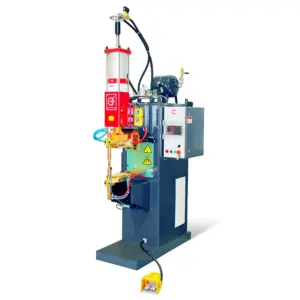
Projection welding is a cornerstone of modern manufacturing, delivering precise, high-strength joints for a wide range of industrial applications. For engineers, OEMs, and automation integrators seeking reliable, efficient, and repeatable welding solutions, understanding the mechanics, advantages, and implementation strategies of projection welding is essential. At Heron Welder, we specialize in providing advanced resistance welding machines, including projection welding systems, to optimize your production processes.
What is Projection Welding?
Projection welding is a form of resistance welding that uses raised projections on one or both workpieces to concentrate current and pressure at specific points. Unlike conventional spot welding, where current flows across the entire contact area, projection welding focuses energy precisely where it is needed. This targeted approach ensures:
-
Consistent weld quality
-
Reduced electrode wear
-
Improved joint strength
-
Higher production efficiency
In projection welding, the projections melt first, forming a robust bond while minimizing heat distortion in surrounding areas. This makes it ideal for thin metals or assemblies requiring multiple welds in tight patterns.
How Projection Welding Works
Projection welding operates through three main principles:
-
Electrical Resistance Heating
The raised projections create localized resistance when current passes through the workpieces. The resulting heat melts the projections at the contact points. -
Pressure Application
Weld electrodes apply precise mechanical pressure, ensuring the molten material fuses correctly and the joint solidifies with uniform strength. -
Controlled Cooling
Once the projections have fused, the electrodes maintain pressure while the weld cools, ensuring minimal distortion and maximum structural integrity.
At Heron Welder, our projection welding machines utilize programmable parameters current, pressure, and weld time allowing engineers to tailor each weld to specific materials and production requirements.
Common Applications of Projection Welding
Projection welding is widely used across industries where repeatable, high-volume metal joining is critical. Some common applications include:
-
Automotive Industry: Fastening brackets, clips, and structural components on body panels and chassis.
-
Electrical Components: Manufacturing transformers, battery packs, and connectors where precise weld placement is crucial.
-
Appliance Production: Joining sheet metal parts in washing machines, refrigerators, and HVAC units.
-
Aerospace and Defense: Lightweight structural components and assemblies requiring high-strength welds with minimal distortion.
By selecting the right projection welding system from Heron, manufacturers can achieve higher throughput and lower production costs while maintaining consistent weld quality.
Projection Welding vs. Spot Welding
While both are resistance welding techniques, projection and spot welding differ in approach and suitability:
| Feature | Projection Welding | Spot Welding |
|---|---|---|
| Weld Focus | Concentrated at projections | Across electrode contact area |
| Electrode Wear | Minimal | Higher due to larger contact area |
| Heat Input | Localized, controlled | Broader, may cause distortion |
| Ideal Use | Multiple welds, complex assemblies | Simple sheet-to-sheet joints |
Projection welding is particularly advantageous when multiple welds are required on a single part or when distortion must be minimized.
Best Practices for Projection Welding
To ensure optimal results, manufacturers should follow these best practices:
-
Design Workpieces with Proper Projections
Height, shape, and spacing of projections influence current density and weld consistency. -
Select Appropriate Electrode Materials
Copper alloys are common for their excellent conductivity and thermal properties. -
Fine-Tune Welding Parameters
Adjust current, pressure, and weld time based on material thickness, type, and number of projections. -
Maintain Equipment Regularly
Clean electrodes and monitor wear to sustain repeatable weld quality. -
Integrate Automation for Consistency
Automated projection welding lines reduce human error, increase throughput, and improve overall efficiency.
At Heron Welder, our machines are designed to integrate seamlessly into automated production lines, providing real-time parameter control and monitoring to guarantee reliable, high-quality welds.
Why Choose Heron for Projection Welding Solutions?
Heron Welder combines decades of experience in industrial welding and metal joining with cutting-edge automation solutions. Our projection welding machines are:
-
Highly customizable to suit diverse materials and production volumes.
-
Designed for integration into automated assembly lines for OEMs and contract manufacturers.
-
Supported by expert consultation to optimize welding parameters, electrode design, and process efficiency.
Whether you’re producing high-volume automotive components or precision electrical assemblies, Heron provides the expertise and equipment to ensure your projection welding operations are efficient, reliable, and cost-effective.
FAQs About Projection Welding
1. What materials can be projection welded?
Projection welding works best with steel, stainless steel, nickel alloys, aluminum, and other conductive metals. Material thickness and projection design are critical factors.
2. How does projection welding reduce electrode wear?
By focusing current on the projections rather than the full contact area, electrode surfaces experience less heat and wear, extending service life.
3. Can projection welding be automated?
Yes, projection welding is highly compatible with automated systems, including robotic arms and CNC-controlled welding stations, enhancing precision and production speed.
4. How is projection welding different from spot welding?
Unlike spot welding, which joins over the entire electrode contact area, projection welding concentrates energy at specific points, resulting in stronger, more consistent welds with less distortion.
5. What industries benefit most from projection welding?
Automotive, electrical, appliance, aerospace, and defense industries gain the most from projection welding due to its high precision, strength, and repeatability.
Take Your Production to the Next Level
For manufacturing engineers, OEMs, and automation integrators looking to optimize welding operations, projection welding is a proven solution that combines strength, precision, and efficiency. Heron Welder offers state-of-the-art projection welding machines, fully customizable for your production needs.
Request a quote or consult with Heron today to explore how our welding and automation solutions can enhance your manufacturing capabilities and ensure consistent, high-quality results for your production lines.

 English
 Arabic
 French
 Spanish
 Portuguese
 Deutsch
 Turkish
 Dutch
Dutch
 Italiano
 Russian
 Romaian
 Portuguese (Brazil)