Aluminum sulfide is an important inorganic compound widely studied in chemistry because of its unique chemical behavior and industrial significance. The compound is formed when aluminum reacts with sulfur under suitable conditions. Understanding the chemical formula for aluminum sulfide helps students, researchers, and professionals learn about its composition, properties, and applications. This compound plays a role in chemical synthesis and laboratory studies, making it a valuable topic in both academic and industrial chemistry.
What Is the Chemical Formula for Aluminum Sulfide?
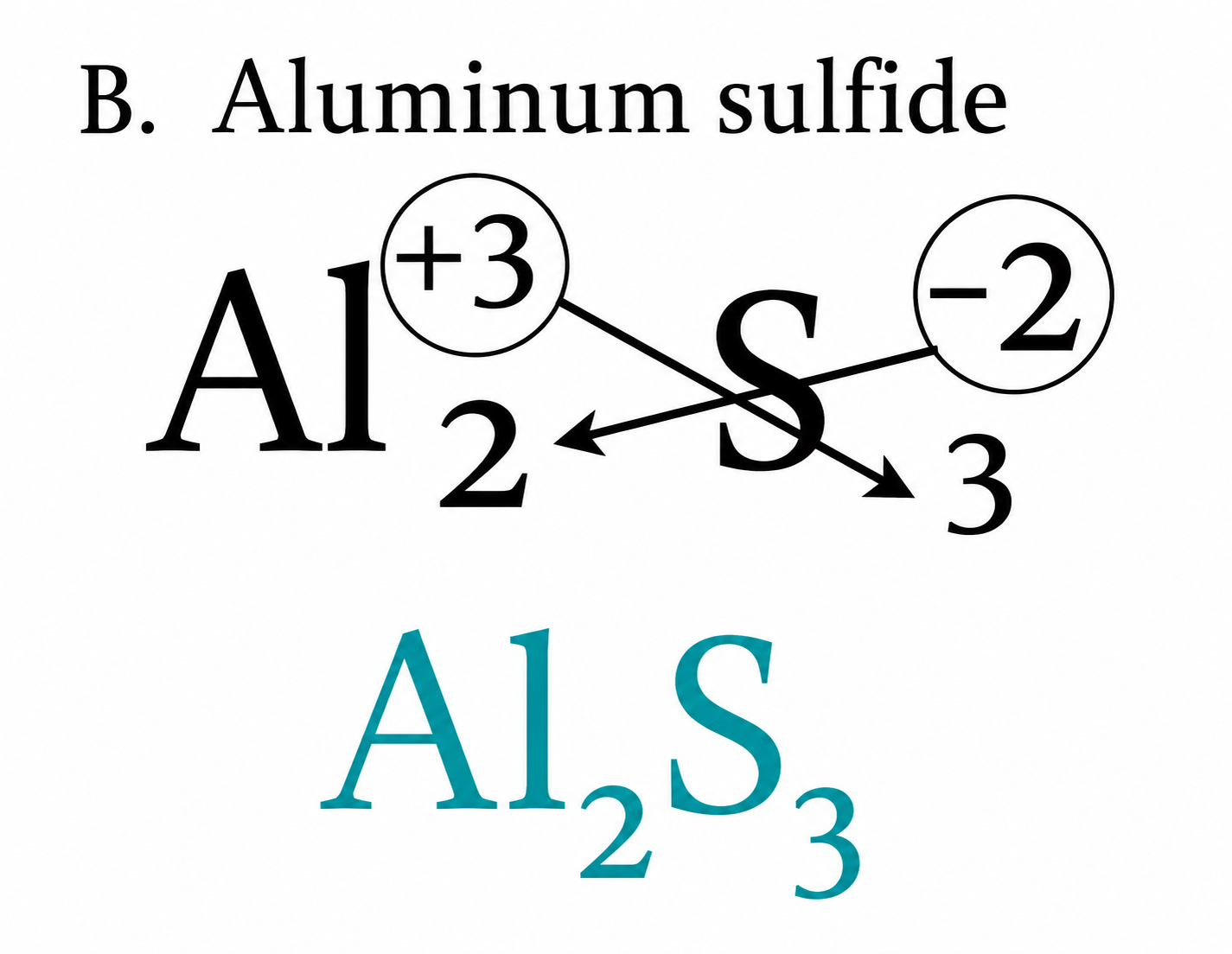
The chemical formula for aluminum sulfide is Al₂S₃. This formula indicates that the compound contains two aluminum atoms and three sulfur atoms. The formula is determined by balancing the charges of aluminum and sulfur ions. Aluminum typically forms a positive ion with a charge of +3, while sulfur forms a negative ion with a charge of -2. To achieve electrical neutrality, two aluminum ions combine with three sulfur ions, resulting in the formula Al₂S₃.
Understanding the Formation of Al₂S₃
The formation of aluminum sulfide occurs when aluminum and sulfur react directly at elevated temperatures. During the reaction, aluminum atoms lose electrons and become positively charged ions, while sulfur atoms gain electrons and become negatively charged ions. These oppositely charged ions attract one another and form an ionic compound. The resulting structure is stable and represents the balanced ratio shown in the chemical formula Al₂S₃.
Chemical Structure of Aluminum Sulfide
Aluminum sulfide consists of aluminum and sulfur ions arranged in a crystalline lattice. The ionic bonding between aluminum and sulfur creates a strong structure that contributes to the compound's stability under dry conditions. The crystal lattice arrangement ensures that positive and negative charges remain balanced throughout the solid material. This structure is responsible for many of the physical and chemical properties associated with aluminum sulfide.
Physical Properties of Aluminum Sulfide
Aluminum sulfide appears as a grayish-white or yellowish solid. It has a crystalline form and remains stable when protected from moisture. The compound has a relatively high melting point and is generally insoluble in many common solvents. Its appearance and texture can vary slightly depending on the purity of the sample and the method used for preparation. These physical characteristics make it easily identifiable in laboratory settings.
Chemical Properties of Aluminum Sulfide
One of the most notable chemical properties of aluminum sulfide is its reaction with water. Unlike many ionic compounds, aluminum sulfide reacts readily with moisture to produce hydrogen sulfide gas and aluminum hydroxide. This reaction demonstrates the compound's sensitivity to water and highlights the importance of proper storage. Aluminum sulfide also participates in various chemical reactions involving acids and other reactive substances.
Reaction of Aluminum Sulfide with Water
When aluminum sulfide comes into contact with water, it undergoes hydrolysis. The reaction produces aluminum hydroxide and hydrogen sulfide gas, which has a characteristic rotten egg smell. This reaction can be represented by a balanced chemical equation showing the conversion of reactants into products. Because hydrogen sulfide is toxic, this reaction should only be conducted in controlled environments with appropriate safety measures.
Preparation of Aluminum Sulfide
Aluminum sulfide is commonly prepared by heating aluminum metal with sulfur. The reaction requires sufficient heat to initiate the combination of the two elements. Once the reaction begins, aluminum and sulfur combine to form aluminum sulfide. Industrial production follows similar principles but may involve specialized equipment to ensure efficiency and product purity. The preparation process demonstrates a classic example of a synthesis reaction in chemistry.
Industrial Applications of Aluminum Sulfide
Although aluminum sulfide is not as widely used as some other aluminum compounds, it has applications in chemical manufacturing and research. It serves as a source of hydrogen sulfide gas in certain controlled processes and is used in specialized chemical reactions. Researchers also study aluminum sulfide to better understand ionic compounds and their behaviors. Its role in industrial chemistry continues to support various scientific and technical developments.
Importance in Chemical Education
Aluminum sulfide is frequently discussed in chemistry courses because it provides a clear example of ionic bonding and charge balancing. Students learn how the formula Al₂S₃ is derived from the charges of aluminum and sulfur ions. The compound is also useful for studying hydrolysis reactions and chemical stoichiometry. As a result, aluminum sulfide remains an important educational tool for understanding fundamental chemical concepts.
Safety Considerations
Proper handling of aluminum sulfide is essential due to its reactivity with water. Exposure to moisture can release hydrogen sulfide gas, which is harmful if inhaled. The compound should be stored in dry, airtight containers and handled with suitable protective equipment. Laboratory personnel should follow established safety guidelines when working with aluminum sulfide to minimize risks and ensure safe experimentation.
Environmental Impact
The environmental impact of aluminum sulfide depends largely on how it is handled and disposed of. If released into moist environments, it can generate hydrogen sulfide gas, which may affect air quality and pose health concerns. Responsible storage, transportation, and disposal practices help reduce potential environmental risks. Regulatory guidelines often govern the handling of such reactive chemical compounds to protect both people and ecosystems.
Comparison with Other Sulfides
Aluminum sulfide differs from many other metal sulfides because of its strong reaction with water. Some sulfides remain relatively stable in moist conditions, whereas aluminum sulfide readily hydrolyzes. This distinction makes it unique among sulfide compounds and influences how it is stored and used. Comparing aluminum sulfide with other sulfides helps chemists understand variations in chemical behavior across similar classes of compounds.
Why the Formula Al₂S₃ Is Important
The formula Al₂S₃ is important because it accurately represents the ratio of aluminum and sulfur atoms required to create a neutral compound. Understanding this formula helps students solve chemical equations, calculate molar masses, and predict reaction outcomes. It also demonstrates the principle of charge balance, which is a fundamental concept in chemistry. The formula serves as a foundation for studying the compound's properties and reactions.
Conclusion
The chemical formula for aluminum sulfide is Al₂S₃, representing two aluminum atoms combined with three sulfur atoms. This ionic compound is known for its distinctive structure, physical characteristics, and strong reaction with water. Aluminum sulfide plays an important role in chemistry education, laboratory research, and selected industrial applications. By understanding its formula, properties, preparation methods, and safety requirements, students and professionals can gain valuable insight into the behavior of this significant inorganic compound.


 Romaian
 English
 Arabic
 French
 Spanish
 Portuguese
 Deutsch
 Turkish
 Dutch
Dutch
 Italiano
 Russian
 Portuguese (Brazil)
 Greek
Greek