We rarely get a perfect match—there’s always a flaw hiding somewhere usually where we forgot to look. In football matches, outcomes are shaped less by hype and more by subtle imbalances—those tiny gaps between strength and vulnerability. We tend to focus on form or star players, but the real story sits deeper. Understanding how teams function and occasionally malfunction is where meaningful insight begins. And yes, sometimes what looks like dominance is just well-disguised fragility—football has a sense of humour like that.
Section 1: Defining Team Strengths
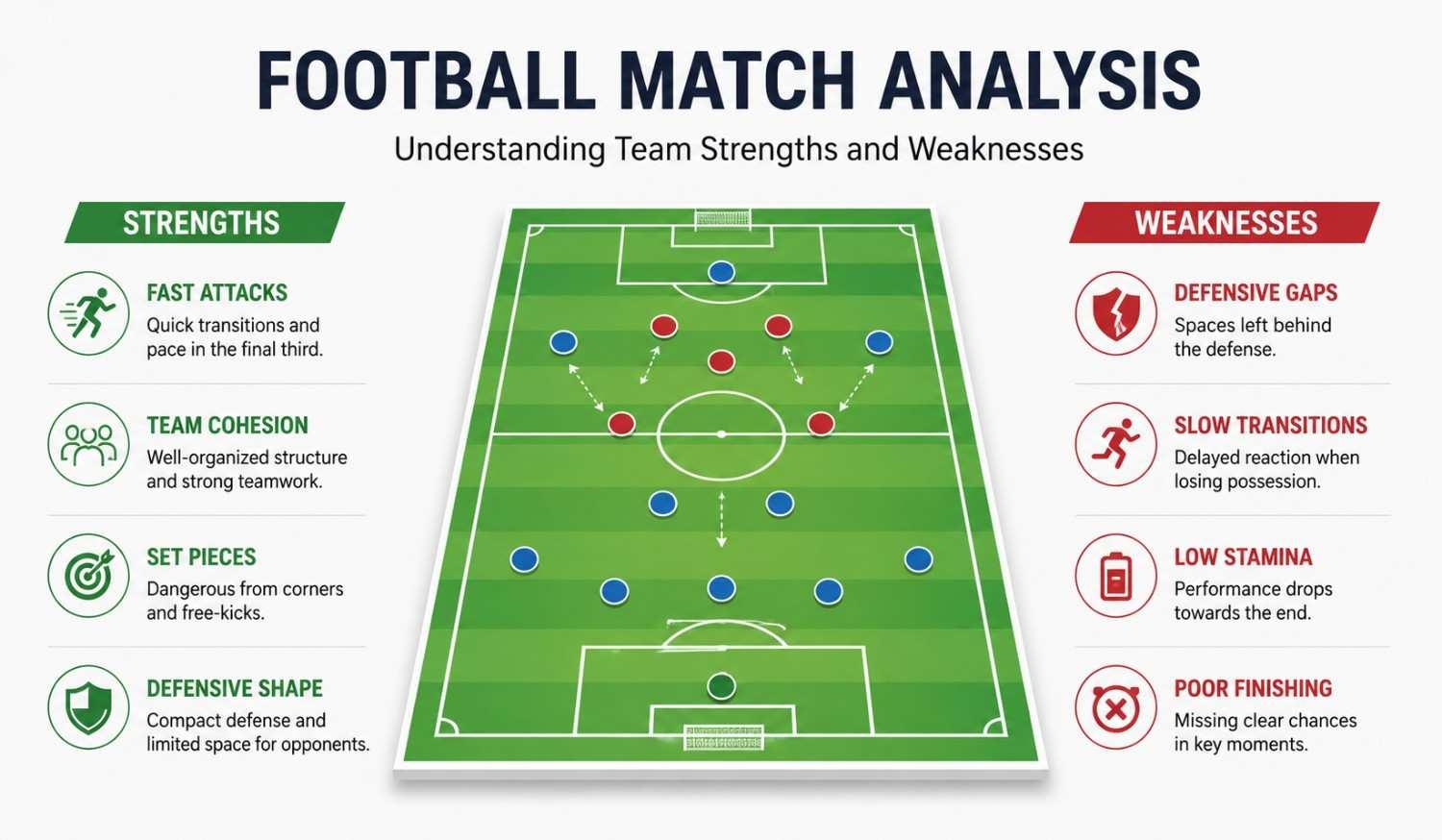
We often label strengths too broadly—“good attack,” “solid defense”—as if that explains anything. In reality, strengths are layered: pressing efficiency, transition speed, positional discipline (the details that quietly win matches). Some teams excel in structured build-up; others thrive in chaos. Recognizing these patterns takes patience—and a willingness to look beyond highlight reels. Strength, after all, isn’t just what a team does well; it’s what they do consistently under pressure (which, as we’ve seen, is where many teams quietly unravel).
Section 2: Identifying Weaknesses
Weaknesses rarely announce themselves—they whisper, then suddenly cost points. A high defensive line might look confident until it meets a quick counterattack (and then it looks… optimistic). Fatigue, poor spacing, or reliance on one player can all become cracks. We’ve noticed that teams often repeat the same mistakes—almost stubbornly—making these patterns easier to track over time. Spotting weaknesses isn’t about criticism; it’s about context. And occasionally, it’s about noticing what a team avoids doing altogether.
Section 3: Tactical Matchups and Balance
Here’s where things get interesting—strength meets weakness, and the game writes its own script. A possession-heavy side facing a counter-attacking team creates a delicate imbalance (one pushes, the other waits). Tactical matchups often decide outcomes more than raw quality. We’ve seen matches where the “better” team loses simply because the opponent understood the matchup better. Football isn’t always fair—but it is usually logical, once we take the time to connect the dots.
Section 4: Data vs Observation
Statistics promise clarity—but they don’t always deliver it. Numbers can highlight trends (possession, shots, expected goals), yet they miss nuance—the hesitation before a pass, the space no one tracks. We tend to combine both: data for structure, observation for meaning. One without the other feels incomplete. And occasionally, the eye test contradicts the numbers entirely (which is when things get properly interesting). Balance, again, becomes the recurring theme.
Section 5: Personal Observation
There was a match that looked entirely predictable—dominant form, clear tactical edge, everything aligned neatly. We expected control, maybe even comfort. Instead, one misplaced pass turned into a goal, and the entire dynamic shifted. What followed wasn’t chaos—it was exposure. The stronger team couldn’t adapt, and suddenly their “strengths” looked rigid. That moment stuck with us—not as a mistake, but as a reminder. Analysis isn’t about certainty; it’s about understanding possibilities (and accepting surprises).
Section 6: Applying Analysis to Future Matches
Once patterns are clear, applying them becomes the next challenge. Not every insight translates neatly into prediction (if only it did). Teams evolve, conditions change, and context shifts quickly. Still, understanding strengths and weaknesses gives us a framework—a way to read games rather than guess them. And while we won’t always be right (football sees to that), we’ll at least be asking better questions—which, in this space, counts for quite a lot.
Conclusion
We tend to chase certainty in a game that resists it—and perhaps that’s the point. Football match analysis isn’t about finding perfect answers; it’s about asking sharper questions (and occasionally laughing when the game ignores them). Strengths and weaknesses offer a lens, not a guarantee. And as we’ve learned—often the hard way—the story of a match is rarely what it first appears to be. Still, we keep analysing, because somewhere between logic and chaos, the game makes just enough sense to keep us coming back
FAQs
1. What is football match analysis?
It’s the process of evaluating team performance, tactics, and patterns to understand how and why outcomes occur.
2. Why are team strengths important?
They reveal what a team can rely on consistently, especially under pressure.
3. How do weaknesses affect results?
Even small vulnerabilities can be exploited, often deciding tight matches.
4. Is data more important than observation?
Neither—effective analysis combines both for a complete picture.
5. Can analysis predict match results?
It improves understanding, but football remains unpredictable by nature.


 French
 English
 Arabic
 Spanish
 Portuguese
 Deutsch
 Turkish
 Dutch
Dutch
 Italiano
 Russian
 Romaian
 Portuguese (Brazil)
 Greek
Greek