

Sample Collection Tools for Environmental Microbiology
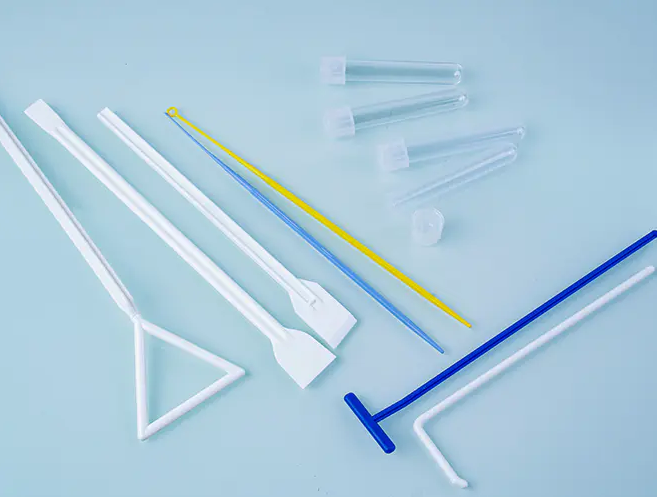
Environmental microbiology presents a unique set of challenges that benchtop scientists rarely face. You are not swabbing a clean stainless-steel surface; you are scraping a biofilm off a river rock or digging soil from a composting facility. The physical environment is dirty, but your data still needs to be clean. This requires a specialized approach to Microbiology Lab Consumables, focusing on ruggedness, portability, and maintaining a strict chain of custody from field to incubator.
The primary tool for the field microbiologist is the sterile sampling bag. Unlike glass jars, these bags are lightweight, shatterproof, and disposable. However, they are not all the same. For general soil or water collection, a simple "Whirl-Pak" style bag with wire closures works well. But for food safety or pathogen research (like Listeria or Salmonella), you need a filtered bag. These Microbiology Lab Consumables have a built-in, non-woven filter membrane. After you add the sample and diluent, you can pipette the liquid directly from the "filtered" side of the bag without sucking up food particles or debris. The pore size of this filter is typically around 315 microns, which allows bacteria to pass through but retains solid matter.
When collecting water samples, you might use a sterile bottle containing sodium thiosulfate. This chemical neutralizes chlorine, ensuring that bacteria present in the water are not killed by residual disinfectant during the drive back to the lab. The volume is critical; standard environmental protocols often require a 500 mL or 1,000 mL sample volume to achieve a detection limit of 1 CFU (Colony Forming Unit) per 100 mL.
Transportation requires robust secondary containment. Leak-proof screw-cap tubes (50 mL conical tubes) are the standard for soil or sediment. However, for anaerobic bacteria—organisms that die in the presence of oxygen—you need specialized Microbiology Lab Consumables like anaerobic transport vials. These vials contain a reducing agent (like resazurin or cysteine) and are filled with an inert gas (like nitrogen). If you open that vial in the air, the dye turns pink, indicating oxygen intrusion, and the sample is compromised.
Back in the lab, environmental samples often require filtration units. If you are testing drinking water for E. coli, you cannot just pour a liter of water onto a plate (it would flood). Instead, you use a vacuum filtration system. You place a sterile, gridded membrane filter (0.45 µm pore size, 47 mm diameter) onto a fritted glass base. Pour the water through; the bacteria are trapped on top of the filter. You then lift that filter using sterile forceps and place it on a selective agar plate. After incubation, you count the colonies growing directly on the grid. This method relies on the precise porosity of the filter membrane. If the pores are too large (0.65 µm), small bacteria slip through; too small (0.22 µm), and it clogs instantly.
Finally, do not forget the personal protective consumables. Handling river sediment or sewage samples requires nitrile gloves (thickness: 4-8 mil) and disposable lab coats. By selecting the right consumables for the environment, you ensure that the "noise" of the field does not drown out the signal of the science.

 English
 Arabic
 French
 Spanish
 Portuguese
 Turkish
 Dutch
Dutch
 Italiano
 Russian
 Romaian
 Portuguese (Brazil)
 Greek
Greek