

Designing Fail-Safe Cooling Networks for Critical Systems
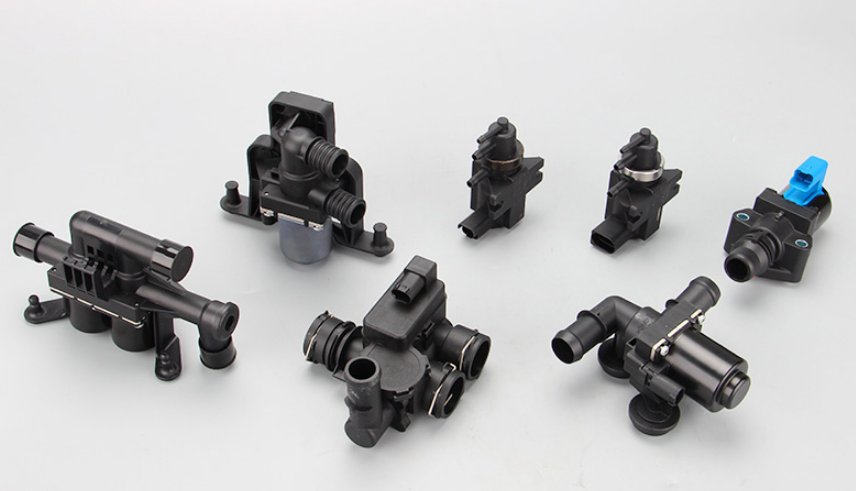
From a system engineering perspective, the Auxiliary Cooling Pump is not just a support component but a reliability element in thermal architecture design.
Cooling systems often follow a redundancy model:
Primary mechanical pump handles baseline flow
Auxiliary pump provides backup or conditional flow
Secondary pump ensures post-shutdown cooling
Engineering specifications often consider:
Mean time between failures (MTBF): 10,000–30,000 hours
Start response time: <2 seconds after ECU signal
Maximum continuous duty cycle: 100% in critical loops
Material selection is also important:
Housing: reinforced nylon, PPS, or aluminum alloy
Seal system: ceramic or carbon mechanical seals
Impeller design: optimized for laminar flow reduction of cavitation
In reliability design, pressure sensors typically trigger auxiliary activation at thresholds around 0.12–0.2 MPa, ensuring continuous system stability.
The Auxiliary Cooling Pump is therefore a key contributor to system uptime, especially in environments where thermal overload could lead to component shutdown or efficiency loss.
 English
 Arabic
 French
 Spanish
 Portuguese
 Deutsch
 Turkish
 Dutch
Dutch
 Italiano
 Russian
 Romaian
 Portuguese (Brazil)
 Greek
Greek