

The Aerosol Valve Explained for Everyday Consumers
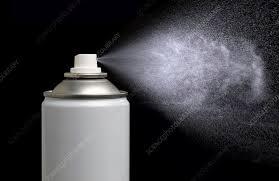
Press down on a spray can. Nothing dramatic happens — just a soft hiss, a fine mist, and the whole thing feels almost too simple. But tucked beneath that nozzle, doing the quiet and unglamorous work of every successful spray, sits the Bluefire Aerosol Valve . It controls flow, manages pressure, decides whether what comes out is a stream or a cloud. Consumers rarely give it a second thought. Until it fails.
Here is something worth knowing: the nozzle is not the real engine here. People fixate on the nozzle because it is visible. But the valve, hidden inside the mounting cup, is what actually opens and closes the path between pressurized product and open air. The nozzle just shapes the exit. The valve decides whether you get one.
Inside, things are deceptively intricate. A stem. A spring. A housing that keeps everything from shifting. Rubber gaskets pressing against each other to form a seal. When the actuator goes down, the stem follows, a tiny gap opens, and pressurized content moves through in a fraction of a second. Describe it that way and it sounds almost too straightforward. In practice, getting it right involves more variables than most people realize.
Spring tension alone can change everything. Too stiff and the actuator becomes a workout. Too loose and the valve activates with almost no input, which creates its own problems. Then there is the opening size, which governs how fast the product flows. Wide openings deliver volume. Narrow ones create finer output. Neither is wrong in isolation — it depends entirely on what the spray is supposed to do. A wood polish behaves differently than a throat spray. Both deserve a valve designed around what they actually need.
Temperature is one of those factors that catches people off guard. Leave a can in a hot car and the internal pressure shifts. Rubber gaskets, sitting under heat for long enough, can begin to lose their shape. Cold storage brings different problems — gaskets stiffen, springs respond slower, the whole mechanism becomes slightly less cooperative. None of this causes immediate disaster. But over time, across enough cycles of heat and cold, the effects accumulate.
Storage habits matter in ways the packaging rarely explains clearly. Keeping cans upright, avoiding sharp temperature swings, using products regularly rather than letting them sit for extended periods — these things genuinely extend how long a valve performs correctly. It is the kind of practical knowledge that sounds obvious once stated, but rarely gets passed along.
Across different industries, what counts as acceptable performance shifts considerably. Kitchen sprays, workshop lubricants, personal care products, and medical aerosols all rely on fundamentally similar mechanisms, but the margin for error shrinks dramatically as the stakes rise. A slightly uneven coating on a cooking spray is inconvenient. A miscalibrated valve in a medical inhaler is a different matter entirely. Valve design cannot be a one-size-fits-all decision. Materials change. Spring calibration changes. The geometry of the seal changes.
When a spray feels off — when the pattern seems uneven, when pressing the actuator requires more force than it used to, when the can seems empty but still sloshes — the valve is almost always involved. These small signals are easy to dismiss as minor product quirks. They are actually the mechanism communicating that something has shifted outside its intended range.
The valve does not get credit. It never will. But it is one of the more consequential decisions a manufacturer makes before a product reaches a shelf, because its performance shapes the entire experience of using what is inside. People feel the quality of a valve long before they could name what they are feeling. Those curious about how aerosol valve engineering translates into real packaging solutions can explore a range of options at https://www.bluefirecans.com/product/ .
 Italiano
 English
 Arabic
 French
 Spanish
 Portuguese
 Deutsch
 Turkish
 Dutch
Dutch
 Russian
 Romaian
 Portuguese (Brazil)
 Greek
Greek