

The Lost Art of Patience: Why Diablo II: Resurrected Endures
In an industry dominated by live-service models, battle passes, and endless microtransactions, Diablo II: Resurrected stands as a quiet monument to a different philosophy. The remaster, released in 2021, did not reinvent the 2000 original; it polished it, preserving mechanics that modern design often considers archaic. There is no cash shop, no convenience fees, no shortcuts to power. What remains is a game that asks for patience and rewards it with something increasingly rare in gaming: genuine satisfaction earned through effort. In a world of instant gratification, Diablo II: Resurrected offers the slow burn.
The core loop of Diablo II: Resurrected is deceptively simple. Players kill monsters, collect loot, and grow stronger to kill more difficult monsters. Yet the execution of this loop demands a level of commitment that modern games rarely require. Progress is slow. A character cannot reach the endgame in a weekend without prior knowledge and assistance. The infamous Duriel fight in Act II serves as an early filter, crushing unprepared players who neglect resistances or attempt the battle underleveled. These barriers are not bugs; they are features, teaching lessons that carry through the entire experience. Each act introduces new challenges that force players to adapt, to farm, to prepare.
The game’s loot system exemplifies this philosophy. Items drop with randomized stats, and the best gear is extraordinarily rare. A player might farm the Chaos Sanctuary for months without seeing a high rune like Jah or Ber. There are no pity timers, no guaranteed drops after a certain number of kills. When a valuable item finally appears, the moment is unscripted and visceral. The distinctive sound of a rune dropping, the golden text of a unique item, the subtle glow of a set piece—these cues trigger genuine excitement because the game has trained players to understand scarcity. Every drop matters because most drops do not. This economy of rarity creates a dopamine loop that modern games, with their abundance of guaranteed rewards, struggle to replicate.
The remaster preserved this economy of scarcity with remarkable fidelity. While it added modern conveniences like a shared stash and auto-gold pickup, it resisted the temptation to rebalance drop rates or introduce catch-up mechanics. The result is an experience where knowledge and dedication translate directly into success. Veterans who understand which areas have the highest treasure classes, which monsters can drop which items, and how to stack Magic Find efficiently will progress faster than newcomers. This gap is not a flaw; it is the natural result of a system that respects player investment. The game does not apologize for its difficulty or its grind. It does not offer to smooth over rough edges or provide alternative paths for those unwilling to earn their gear.
For many, this approach feels like a revelation in an era of homogenized game design. The game’s infamous Mephisto run—repeating the same boss hundreds of times for a chance at rare items—is not hidden away or disguised. It is the endgame, presented honestly. Players either embrace the rhythm of the grind or they move on to other games. There is no middle ground, and that clarity is refreshing. The grind becomes a meditation, a rhythm that players settle into after a long day. The repetition is not mindless; it is purposeful, each run a small step toward a larger goal.
The community that has formed around the remaster reflects this patience. Ladder seasons reset the economy every few months, forcing everyone to start from zero. Veterans eagerly return to the grind, racing for the first level 99 or competing to complete the Holy Grail of every unique item. New players find themselves guided by strangers who drop extra gear, rush characters through difficult acts, or explain the intricacies of rune words like Spirit and Insight. These interactions thrive because the game does not automate them. To succeed, players must communicate, trade, and build reputations. The patience the game demands extends to its social fabric.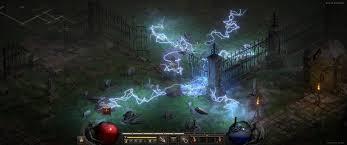
diablo2 resurrected endures because it asks something of its players. It asks for time, for learning, for the willingness to fail and try again. In return, it offers moments that modern games struggle to replicate: the first time a self-found Enigma armor is crafted, the celebration when a party finally defeats Uber Tristram, the quiet pride of completing a character build planned for months. These experiences cannot be purchased or shortcut. They must be earned, and in an industry increasingly designed to remove friction, that friction has become the game’s greatest strength. Sanctuary remains a place where patience is not a barrier but a virtue, and where the journey matters as much as the destination. For those willing to invest the time, Diablo II: Resurrected offers something priceless: a sense of accomplishment that no battle pass can provide.
 Italiano
 English
 Arabic
 French
 Spanish
 Portuguese
 Deutsch
 Turkish
 Dutch
Dutch
 Russian
 Romaian
 Portuguese (Brazil)
 Greek
Greek